Translate

Showing posts with label reading. Show all posts

Friday, May 21, 2021

Reading as an Act of Resistance ?

 Here is an article from  the Arab Weekly (Oct 2020) on publishers in Morocco trying to promote reading (and therefore buying books)  in conjunction with a celebration of the Green March

______________________________________________

Moroccan publishers promote reading as ‘act of resistance’

RABAT- The Union of Moroccan Publishers will launch an initiative titled “reading is an act of resistance” on November 6 to commemorate the 45th anniversary of Morocco’s Green March.

The Green March is a mass demonstration organised by tens of thousands of Moroccans in November 1975 to call on Spain to return the Western Sahara to Moroccan sovereignty.

“Publishers, readers, writers and everyone who is interested in books and reading are invited to participate in this initiative that will last until December 20,” the Union of Moroccan Publishers said in a statement.  

FULL ARTICLE

credit: Librarie Tazi (Casablanca, Morocco)


Monday, November 4, 2019

Face-books: Publishing via Social Media in Morocco

Here is an article from Qantara which was originally written in Arabic on the use of social media platforms by Moroccans to self-publish novels and to share information about reading.

_______________

Published by Facebook

Social media has democratised literary publishing, paving the way for young Moroccan writers to publish works which previously would not have enjoyed publication through traditional outlets.

By Ismail Azzam
(translated by Chris Somes-Charlton)

As the trend in social media took off, there was a fear that it would drive young Moroccans further away from writing, against a background of dismal statistics showing that most people in North Africa and the Middle East read only a few pages a year. This fear found its echo in the invasion of smartphones into everyday life, in such a manner that left books as no more than decoration in the front rooms of many households.

Despite this gloomy outlook, many Moroccans actually use social media to find out about books. Visit social media sites and you will see Facebook groups such as "Publications Iʹve read", "Ktoubna" and "Book share". These groups attract tens of thousands of eager readers. Moreover, Moroccan readers get involved in the group discussions on individual books via the Goodreads platform to review the writings.

This interest does not stop at reading books; it extends to writing them as well. These days it is apparent that many young Moroccan writers set out to write novels early in their lives, even though some of them are only known for their literary aptitude through Facebook.

Amongst those writers with whom Moroccan readers have become acquainted via social media is Abdul Aziz al-ʹAbdi who recently published "The book of faces" (a literal translation of Facebook). There is also Abdul-Samiʹ Bensaber, who recently published the novel "A Serpentʹs tail", as well as Mohammed Benmiloud who wrote "The Dangerous Neighbourhood", as well as many others who have either just begun or recently circulated their literary works on social media.

In this article, we will look at some of these writers, although the choice of the names below is not a reflection of their literary merit or lack of it. Rather, they are examples which shed light on the phenomenon of writing amongst young Moroccans.


FULL ARTICLE


Friday, January 6, 2017

Public Library on the Beach - A first in Morocco

Here is a photo piece on a small public lending library opened on a beach in El Jadida, Morocco.
The original Arabic story from al-Youm24 can be found here.
Morocco World News translated the original piece, a portion of which is found below.
___________

Rabat – Supported by Ministry of Culture, young Moroccans have taken initiative to inaugurate the first beach library in Deauville area of El Jadida, according to AlYaoum 24.

The same source said that the initiative aims to increase the number of Moroccans reading and create an atmosphere of entertainment for visitors and vacationers in El Jadida in the summer.

Tuesday, January 7, 2014

Three Moroccan Writers Nominated for the Arab Booker Prize

Here is an article from  Sharq Al-Awsat on the nominees for the Arab  Booker Prize , an international prize for Arbic fiction. Three of the 16 authors are from Morocco and they are: Youssef Fadel, Ismail Ghazali, and Abdelrahim Lahbibi .
_______________________________________

International Prize for Arabic Fiction longlist announced

Sixteen writers from 10 countries included on this year's longlist for the prestigious prize


Among the well-known names are the Syrian novelist Khaled Khalifa for his No Knives in this City’s Kitchen, which was awarded the prestigious Naguib Mahfouz Medal for Literature in December 2013. Also on the list are the Egyptian Ibrahim Abdelmeguid for hisClouds Over Alexandria, and twice-longlisted Waciny Laredj for hisAshes of the East: The Wolf Who Grew up in the Wilderness.London, Asharq Al-Awsat—The International Prize for Arabic Fiction (IPAF), also known as the Arabic Booker Prize, announced its longlist of 16 writers on Tuesday, featuring works from 10 different Arab countries.

Four of those selected this year have made it onto the shortlist in the past. These include the Sudanese writer Amir Tag Elsir, Iraqi Inaam Kachachi, Palestinian–Jordanian Ibrahim Nasrallah and Khaled Khalifa.

In a remarkable shift from previous years, the 2014 longlist features two crime novels, Ahmed Mourad’s whodunit bestsellerThe Blue Elephant, as well as Frankenstein in Baghdad by the Iraqi novelist Ahmed Saadawi.

Morocco, Iraq and Egypt took the lion’s share of this year’s longlist, with three nominations each. For the second year in a row, Kuwaiti authors have made it onto the longlist, following the well-received success of Saud Alsanousi in winning last year’s IPAF prize with The Bamboo Stalk, a work that deals with the question of identity and the controversial phenomenon of foreign workers in Kuwait.

FULL ARTICLE


Saturday, September 8, 2012

The Cultural and Literary Scene in Morocco

Here is an article from Qantara.de.  about the culture of reading,publishing, and the current literary scene  in Morocco. It came out at the end of last year but still seems timely and relevant.  It is  also available in Arabic.
______________________________

The Cultural and Literary Scene in Morocco: From the Caravan of Books to the Literary Café

Morocco has not bothered to wait for the Arab Spring to revolutionise its cultural scene. It took off in the 1990s and is showing no sign of stopping – Moroccan artists exhibit in beauty salons, tennis clubs become impromptu literary cafés and a hotel sponsors the country's most prestigious literature prize. 

By Regina Keil-Sagawe

It was a glamourous event, and a touch surreal, when Mahi Binebine was awarded the newly established literary prize in the legendary and luxurious "La Mamounia" hotel in Marrakech for his novel "Les étoiles de Sidi Moumen", set in the slums of Casablanca and dealing with the suicide bomb attacks carried out in the city on May 16th in 2003. Rather a bizarre contrast, but not unnusual for Morocco, it has to be said.

Not that anyone begrudges the likeable allrounder Binebine, whose paintings have long been a feature of the Museum of Modern Art in New York, success in his native country. It is rather surprising, however, that practically all of the authors on the "Mamounia" shortlist are published by French publishing houses. And one wonders how the "Mamounia" intends to encourage Moroccan literature if it does not include any Moroccan publishing houses on its list.

A book market without readers?

Moroccan literature from Europe: Most writers awarded in Morocco, as for instance Mahi Binebine, are published by publishers in France
On the other hand, why should the luxury hotel succeed with its prestigious coup where the Moroccan ministry of culture and the French embassy have been failing for years? Although the literary prize of both institutions – the Prix du Maroc du Livre and the French Grand Atlas – traditionally go to authors with Moroccan publishers, it has not been enough to bolster the Moroccan book market with its two thousand or so new publications a year and with diminishing print runs that rarely top a thousand.

Although Tangiers and Casablanca have hosted international book fairs for years, the country's top publishers, Abdelkader Retnani (La Croisée des Chemins), Rachid Chraïbi (Editions Marsam) und Layla Chaouni (Le Fennec), complain of the government's lethargy. There are too few subsidies, too many bookshops closing and no transparent figures available on the book market; all this despite the fact that current Minister of Culture, Bensalem Himmich, is himself a writer.

And then there is the inadequate infrastructure. Instead of the planned four thousand, there are a mere five hundred public libraries. Even in the major cities there are likely to be no more than ten, maybe twelve, bookshops, their owners' usually not even trained booksellers. Until recently, professionally run book shops, such as the Kalima wa Dimna in Rabat or the Carrefour des Livres in Casablanca, seemed heavenly literary oases in a desert of illiteracy.

Back in 2002, the writer Ahmed Bouzfour took Morocco's powerful rulers to task, bemoaning the sense of shame he felt at their incompetent governance and their cultural, social and economic decadance. He then also refused to accept the Prix du Maroc du Livre with its accompanying 7000 dollars prize money. Why bother to award a literary prize for books that do not sell because one in two Moroccans cannot read, in the rural areas the figure rises to nine out of ten.

Campaign for culture
Tremendous efforts have been made since that time to reduce illiteracy. Morocco's media used the occasion of World Literacy Day on September 9 to take stock of the situation. Since 2003 five of the thirty-two million Moroccans have achieved literacy outside the school system, 84% of 15 to 24-year-olds are now able to read and write, and even among the older age groups there is now 68% literacy. It is an achievement that state institutions alone could never have managed and required the efforts of numerous participants from civil society.

 One of those pioneers is Julia Hassoune from Marrakech, who, along with Fatima Mernissi, launched the "Caravane Civique" (citizens' caravan) in 1999, and the "Caravane du Livre" (caravan of books) in 2006. Hassoune undertakes expeditions into remote mountain villages or distant oases in the company of artists, writers and educationists to deliver drama, writing, painting or storytelling workshops.

At the same time as these developments, and practically overnight, a plethora of new literary awards were springing up. Prizes, which are directed primarily at young writers, with TV stations, publishers, cultural institutions, magazines, foundations and banks as sponsors. In 2002, the "House of Poetry" sponsored a newcomer's prize for Arab poetry, in 2005 the magazine "Tel Quel" initiated a short story prize, and in 2006 the 2M TV station came up with its prize for the best new Arab, Francophone and Amazigh literature.

Marsam publishing has already published the fourth volume "Côté Maroc: Nouvelle Noire", the result of a crime writers competition run by the Institut Français in Marrakech since 2007. In 2010 the "Magazine littéraire du Maroc": created two new prizes: a francophone short story prize and a major prize for literature in the French, Arabic and Berber languages, which is due to be presented by Tahar Ben Jelloun in the elegant new national library in Rabat on 14 October.
The Moroccans already have a name for this dynamic cultural energy that has long been part of the country's young art scene – "movida" or "moufida", also known as "nayda" (from the standard Arabic "nahda" – renaissance) and is now sweeping into the literary world also.

Literature festivals and literary salons are everywhere, and the latest manifestation is the literary café. Literature programmes in the media may be in short supply, but there are plenty of opportunities for 'live' encounters with books and authors – and the latest innovation, the new "Magazine littéraire du Maroc" founded by historian Abdesselam Cheddadi in 2009, and initially published only in French, is now about to add an Arabic edition, with a Berber edition in the Amazigh language also planned.
Back in the 1990s, when support for the Berber language meant facing a possible prison sentence, the idea that Amazigh might one day be accepted as one of the official national languages seemed impossible. But on October 17 2001, the Royal Institute for Amazigh Culture (IRCAM) was set up, and in 2005 it announced its first prize for Amazigh literature. Now it is cool to be Berber, and since the referendum of July 1, 2011, the language that is the mother tongue of around half the people of Morocco has been constitutionally recognised as an official language. It now enjoys the same status as standard Arabic.

A hot potato
This is not to say that the other half of the population speaks standard Arabic. Most speak a Moroccan Arabic dialect known as "Darija", a mix of Arab and Berber with traces of French and Spanish, which horrifies the purists, but is so much a part of the soul of the people and everywhere in the media – internet forums, rap music, and advertising slogans.
In 2006, the American Elena Prentice, publisher of the free weekly "Khbar Bladna" (the latest news from our country) in Tangiers, a very popular paper that tries to close the gap between the educated and the semi-literate, was the first and only (so far) to offer a prize for Darija literature. It was the adventurous General Secretary of the Moroccan PEN, Youssef Amine Elalamy, who published the first literary text in Darija with Elena Prentice in 2006 – "Tqarqib Ennab" (gossip), a collection of portraits.

On 2 October, the second "Mamounia" literature prize was awarded. And, once again, the authors are almost exclusively with French publishers, including Fouad Laroui, whose essay "Le drame linguistique marocain" is a plea for more recognition for Darija. It will be interesting to see whether in the exclusive setting of the "Mamounia" the jury, with its diverse representatives of the French-speaking world from Senegal and Morocca to Quebec, will dare to pick up this hottest of Arab hot potatoes.

Regina Keil-Sagawe
© Qantara.de 2011
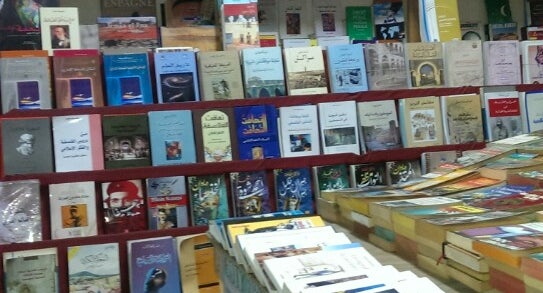
Wednesday, August 29, 2012

Moroccan Photographer Captures Readers on NYC's Subway

Here is an article from Fast Company about a website  Underground New York Public Library  where Ourit Ben- Haim , a Moroccan  photographer collects photos of people reading on the Subway along with information on the books they are reading. It's worth a visit.

________________________


Portraits From NYC’s Most Popular Reading Room: The Subway


Street photographer Ourit Ben-Haïm captures thousands of New Yorkers immersed in books of all sorts.


Reading on the subway is something of an art in New York, where elbows and inquisitive eyes--not to mention all manner of hijinks--can make reading in peace a challenge. Moroccan photographer and artist Ourit Ben-Haïm has made a sport out of watching subway-bound readers, collecting candid snapshots of commuters immersed in their books on her website, The Underground New York Public Library.

Ben-Haïm, who works under the handle She Said Unprintable Things (a phrase borrowed from Lolita), posts new images to the UNYPL on a daily basis. Along with each image, she includes the name of the book being read and the author. If she can’t identify the book, she’ll ask her Tumblr followers for help. “I’m an artist and a storyteller,” she says. “The NYC subway provides a constant metaphorical suggestion of the relationship between our stories and our journey.” Her subjects are old and young, couples and groups of readers whose relationships are ambiguous. Because she has over 10,000 followers, there’s an unusual feedback loop that often occurs with her postings--people will respond not only to help identify the books being read, but also to identify the subjects themselves.


Ben-Haïm studied comparative literature and history in college, but has always taken photographs. She shoots with a Canon 5D Mark II, a conspicuously large camera that doesn’t allow very much subtlety in a subway car. But the 29-year-old says that interacting with her subjects is one of the reasons she loves street photography. “Reactions tend to be curious or puzzled when I shoot, and in general very accepting and encouraging once I explain why I’m taking the photographs,” she explains over email. “I love the process of making these photographs in part because of the amazingly pleasant engagement with people.”

Given the growing prevalence of digital readers, UNPYL is a kind of ad hoc memorial to the increasingly rare printed word. “There is loss and gain with all change, and the shift to eReaders is no exception,” says Ben-Haïm. “An eReader is less visually vulnerable, and my perspective is that this is a social loss.” At the same time, she adds that she loves her own tablet, and wants to portray the shift between paper and reader, too. “I love when the shift is visually visible in my photographs, in the cases where there are people with print books and eReaders within the same frame.”
Above all, says the young photographer, the images are about "all aspects of Story"--capitalization intended. “I’m fascinated by how we apply ourselves to stories and discourse,” she explains on UNYPL. “This library freely lends out a reminder that we’re capable of traveling to great depths within ourselves and as a whole.”

Wednesday, April 25, 2012

"Culture Against Triviality," The Moroccan Campaign to Promote Reading

Here is an article from al-Ahram about an event  called "Culture Against Triviality" that took place recently in Morocco to promote reading in the country.
___________________________
"Culture Against Triviality," Moroccans ampaign to promote reading
Cultural activists launch literary flashmob outside Moroccan parliament on World Book Day to encourage reading, as citizens spend 24 times less money than the world average on books
 
Ahram Online, Monday 23 Apr 2012

Civilian activists in Morocco launched a campaign entitled  "Culture Against Triviality" calling people to read a book for an hour in front of the Moroccan Parliament as a part of their participation in 23 April's  World Book Day.
This symbolic initiative aims to spread awareness of the importance of books and reading in the life of the Moroccan citizens. According to a report published by the Saudi News Network AlArabiya.net, the literary flash mob aims to promote what it calls “real culture” working against cultural stereotypes based on destructive values that the group feels debases Moroccan public taste.

Reading percentages are poor in Morocco. According to recent statistics, a Moroccan citizen spends an average of just one Moroccan dirham (MD) per year on buying books (around 11 cents) at a time when the world average is MD25 ($3). In addition Morocco publishes only 2,000 titles per year while in France, for example, 60,000 new releases hit the shelves annually.

Cultural movements in Morocco recently called for halting the country's “Mawazeen World Singing Festival” via videos posted on the internet. The clips included statements by academics, musicians, and intellectuals who criticised spending so much money on such festivals while neglecting books and reading activities.
The activists called for a boycott of all the "trivial" recreational activities.  Moroccan thinker, Idrissi Abu-Zaid said in an excerpt of one of the videos that "reading is a nation, shaped like a pyramid, its basis is the readers, and its middle is the intellectuals, while its top is scientists."

 Abu-Zaid, who is a leading member of the ruling Justice and Development party,  warned against marginalising books and not encouraging reading, stressing that the long term impact on society will jeopardise Morocco's place in the international arena.