Translate

Showing posts with label Spain. Show all posts

Sunday, April 19, 2015

The Reconquest of the Mosque of Cordoba - a part of Moroccan Cultural History

 Here is a well written piece on the mosque-cathedral of Cordoba and the tension around Muslims and Islamic history in Spain.  We generally put the opening paragraphs of an article below, but due to the sensitivities of the parent publication, you will have to follow the links for the article. Its well worth it.
 ___________________
credit: Peter Millett

The Reconquista of the Mosque of Córdoba

By Eric Calderwood

Spain’s most famous mosque is at the center of a dispute between activists seeking to preserve its Muslim heritage, and the Catholic Church, which has claimed it as its own. The result could determine the future of Islam in Europe.
FULL ARTICLE

Monday, December 1, 2014

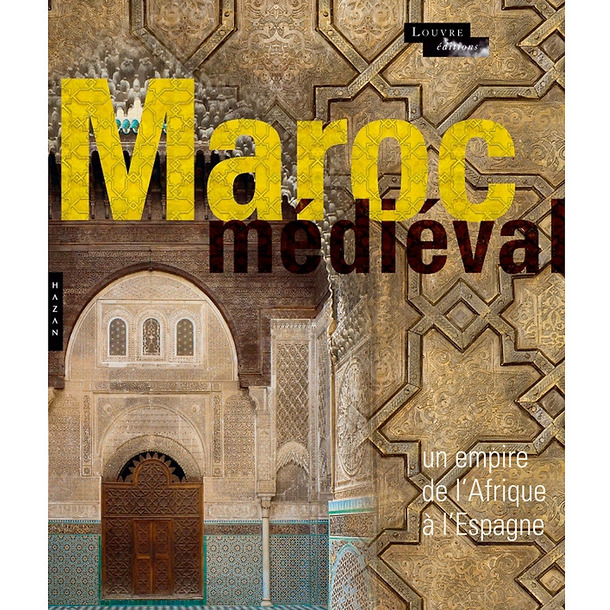
Art Exhibits on Medieval and Contemporary Morocco in Paris

Here is a piece from  Al-Ahram on two exhibits, one on medieval Morocco at the Louvre and the other on contemporary Moroccan art and culture taking place at the Institute of the Arab World in Paris.
________________________

Morocco comes to Paris

by David Tresilian

PARIS - The late king Hassan II of Morocco is reported to have said that his country was something like a tree “with its roots in Africa and its branches in Europe.” Visitors to the French capital will find that it is Morocco’s European branches that are in the spotlight this autumn, with a major show on the kingdom’s mediaeval history taking over the temporary exhibition spaces at the Louvre and an intriguing exhibition of contemporary Moroccan art and culture occupying most of the Institut du monde arabe a short distance away in the seventh arrondissement.

Both exhibitions are jointly sponsored by the French and Moroccan authorities, with king Mohammed VI of Morocco giving his patronage to both. While the Louvre show is an ideal opportunity for visitors to remind themselves of Morocco’s sometimes complicated mediaeval history, presented with the museum’s customary curatorial scholarship and savoir-faire, the exhibition at the Institut du monde arabe is more surprising, perhaps even edgy in its choice of works on show. Both have been drawing large and appreciative audiences, raising Morocco’s European profile and contributing to knowledge of the country abroad.

The Louvre show, opening on 17 October, presents visitors with artifacts illustrating Morocco’s early history from the conversion of the country to Islam in the 8th century CE to the fall of the ruling Marinid Dynasty some seven centuries later. It is the first major exhibition on the Muslim world to have been held at the Louvre since the opening of the museum’s department of Islamic art two years ago (reviewed in the Weekly in September 2012), and according to curators Yannick Lintz, Claire Delery and Bulle Tuil-Leonetti it is intended to serve as a manifesto piece for other exhibitions to follow.

The idea behind the show, the curators comment, is to allow visitors to “find out more about the art and culture that a particular area was producing during a specific period of time, in this case the area between Africa and Europe over a period of five centuries from the 10th to the 15th centuries CE. This period corresponds to the Middle Ages in western Europe, and the centre of this area was Morocco and the great cities of Fes, Marrakech and Rabat that were founded at this time along with the Spanish cities of Cordoba and Seville that were embellished by the Moroccan ruling dynasties.”


FULL ARTICLE

Wednesday, November 14, 2012

Moroccans Leave Spain (and its Economic Troubles) for Home

Here is an article from the Christian Science Monitor on the wave of Moroccans returning to their homeland due to the increasingly bleak economic situation in Spain. The first portion of the article is pasted below.
____________________

Spain loses title as Moroccans' land of opportunity 

Moroccans seeking economic opportunity used to flock to Spain, but with its economy tanking, Spain has less and less to offer them. 

By John Thorne, Correspondent / October 22, 2012
Tangier, Morocco

“I saw my friends losing their jobs,” he says. “And I knew that eventually the same thing could happen to me.”
Mr. Benhima, like an increasing number of Moroccan migrants, is giving up on his northern neighbor. For years Spain beckoned as a land of opportunity, but that image is now shattered by an economic crisis that has pushed unemployment there to nearly 25 percent.

For Morocco, Spain’s woes are part of larger troubles among European trading partners that have dented the Moroccan economy, too, as remittances and tourism revenue have sagged. For Spain, fading luster as a source of jobs underlines how deep its malaise has become.


Unemployment among Spain’s estimated 783,000 Moroccan workers is just over 50 percent – roughly twice the national rate, according to a report released in May on the effect of Spain’s crisis on Moroccan workers by Colectivo Ioé, a Spanish social affairs research institute. Data from Spain’s central bank indicates that remittances to Morocco fell by a third between 2007 and 2010.

Increasingly, Moroccans are giving Spain a pass. While illegal migration makes exact numbers murky, a net loss of Moroccan immigrants was registered in 2010. Last year that loss was nearly 22,000, according to Spain’s national statistics institute.

Coming full circle

Change is felt acutely in Moroccan cities like Tangier, where Spanish headlands are visible across the Strait of Gibraltar. For years Morocco’s north, a region formerly colonized by Spain, has relied on sending migrants there to help feed families at home.

Benhima grew up in Tetouan, once Spain’s colonial capital, where his father worked as a customs official. He went to Barcelona to study textile engineering in 1998, but financial concerns led him to dive into the job market instead.
“At first you work to pay for studies, but then you forget studies and just work,” he says.

He drove a golf cart by day and tossed pizzas at night, supporting himself while also helping cover medical bills for his father. He stayed in Spain for two uninterrupted years, until he got legal residency. Then, in 2000, he surprised his parents with a visit. His father died four days later.

Benhima’s mother and three siblings moved to Tangier, while he settled in Madrid. Using his ability to speak Spanish, French, English, and Arabic, he found work in 2001 handling overseas clients for an insurance company. The job put him in the top tier of Moroccans drawn by an economic boom in Spain. Moroccan arrivals peaked in 2005 at about 75,000, according to the Colectivo Ioé report.

Meanwhile in Tangier, Benhima’s mother, Badia Amrani, founded BAYSIM, a goods transit company, in 2006.

Read continuation of article here.

Wednesday, December 28, 2011

Swimming to Europe by Way of Cueta (Sebta), Morocco


Here is an article from Radio Netherlands Africa about people from Sub-Saharan Africa seeking refuge in Cueta/Sebta as a step towards reaching Europe.

__________________

Swimming Towards the Future
Published on : 27 December 2011 - 2:51pm | By RNW Africa Desk


The refugee camp in Ceuta, a Spanish enclave in Morocco, has been facing severe overcrowding during the last couple of weeks. Again. Africans have found yet another way to get in – by swimming around the border fence. Large numbers of people make the attempt at the same time to reduce the chances of being caught.

By Lex Rietman

Dusk is falling at Ceuta refugee camp. The sun is setting early on this winter day, but there is just enough light to enjoy the view over this fortified Spanish city on Morocco’s northern coast. The town is spread out below us, with the Strait of Gibraltar to the left. On the other side of the water, the last rays of sunshine bathe the rock of Gibraltar in a golden glow. That’s where the prosperity of Europe begins – a corny Hollywood movie couldn’t have done it better.

Crisis or no crisis, Europe still embodies the hopes and dreams of millions of Africans. For the residents of the Temporary Immigrant Housing Centre (CETI) – the official name of this compound on the mountain just outside town – only half the dream has come true. After all, Ceuta is Europe but then again, it isn’t. Across the water, on the Spanish mainland, is where the Schengen area begins. There, you are free to travel, with no internal border controls. But reaching Ceuta is nevertheless a big step towards realizing the dream.

Reinforced border

In recent years, Ceuta has been turned into an almost impregnable fortress. Six years ago, hundreds of Africans managed to force their way into the city from Morocco. The European Union has responded by spending millions of euros on border reinforcement. What is more, for a few years Morocco has been actively cooperating in the fight against illegal immigration. In return, Rabat has negotiated favourable trade conditions with the EU.

All these measures, however, don’t discourage the African refugees. Ibrahim Traore, a 21-year-old Cameroonian, has been in Ceuta for two weeks now. “Around 100 of us jumped into the sea on the Moroccan side – 78 of us made it,” he says. “I was very lucky, because I managed to get here after only three months of waiting in Morocco. On the other side of the border hundreds, maybe thousands of people like me are hiding in the mountains, waiting for a chance. Some have been waiting years.” Anyone unfortunate enough to be caught by the Moroccan police is deported to Mauritania, 3,000 kilometres to the south.

Speed record
“Four months and eleven days.” With astonishing accuracy, 26-year-old Cédric from Chad tells us how long he has been in Ceuta. He must have set some kind of speed record, because he left his village “on 12 March 2011”. Cédric also arrived in the Spanish enclave across the sea, but not by swimming. With six other people, he bought a Zodiac dinghy and they managed to reach the Ceuta coast. When asked whether he is doing alright in the refugee centre, he says: “Yes, I’ve got nothing to complain about, though I do get bored occasionally.”

CETI isn’t a normal refugee centre. The centres on the Spanish mainland are detention centres under the jurisdiction of the Interior Ministry. The poor facilities and harsh treatment of immigrants regularly prompt sharp criticism by humanitarian organisations.

Sense of dignity

But like Melilla, the other Spanish enclave in Morocco, Ceuta has an open refugee centre. Residents receive an ID card and are free to go wherever they want within the enclave. Director Carlos Bengoetchea stresses the psychological importance of this approach: “It gives them a sense of dignity and of being legally protected,” he says. “Finally they have become a person again, often after years of travelling without documents, at the mercy of corrupt policemen.”


In the centre, refugees can take computer, language and cooking lessons, and it has a small, but much-used gym. The original gym was bigger, but is now being used as a dorm, out of necessity. Today, the centre is home to 700 refugees, 200 more than it was officially built to house.

Relaxed
Even so, there’s a relaxed atmosphere in the compound. “The question is for how long,” says Carlos Bengoetchea. “We’ll have to wait and see what Prime Minister Rajoy’s new right-wing government decides to do with the centre. Judging from his party’s tough stance on immigrants, it doesn’t look good.”

Monday, March 21, 2011

Bringing Si Abd El-Krim, the Rifi Warrior Home to Morocco


Here is a piece from Public Radio International' show the World on the valant man from the Rif who fought Spanish and French colonizers in Morocco, and attempts by his relatives to get his remains repatriated to Morocco from Egypt. If you clink on the link, you can access the audio.
_____________________________________
Abd El-Krim: A Moroccan Hero who Never Was
By The World ⋅ March 17, 2011

By Gerry Hadden

As North African and Arab citizens cast about for leaders to fill the political vacuums in their countries, a quick remembrance of one such leader from days gone by. Abd El-Krim made his name liberating northern Morocco from Spanish colonial rule, in 1921. He was a scholar, a warrior and, for a brief time, even an emir. But Abd El-Krim was also a Rif, an ethnic group within the region’s larger Berber community. And that’s kept him sidelined in Morocco’s official history.

It began with the decisive battle against the Spanish, in 1921, at Annual, in the
mountainous Rif region of northern Morocco. The fight pitted Abd El-Krim and his rag-tag Rif militias against thousands of Spanish troops. One former Rif fighter, an elderly man named Chaaib Si-Mohand N’aali ,spoke of their victory in a Spanish documentary three years ago.

“Abd El-krim was our leader,” the old man recalled. “We surrounded the Spanish. They resisted. But they were afraid and exhausted. We wiped them out.

The Rif are ethnic Berbers … the indigenous people who’ve lived in North Africa for more than two millennia. The story of how their leader, Abd El-Krim, liberated them from colonial exploitation has become a legend for them. Journalist Merieme Addou’s grandfather fought alongside Abd El-Krim. Addou said Abd El- Krim was far outnumbered by the Spanish and knew he couldn’t fight an ordinary war.

“You need to have a tactic to win,” she said. “The Rif is a region of mountains. As foreigners, if you come here you don’t know this place. You don’t know where you are. So it was kind of using this very hard, difficult land, using it as a way to defeat the Spanish; using guerilla fighting.
Declaring independence

After victory, Abd El-Krim established the Rif Republic, a state independent not only from Spain and Morocco’s other colonizer, France, but from Morocco itself. The Republic’s new emir sent letters to every European head of state to announce it.

But his declaration fell on deaf ears. Five years of fighting later, the combined Spanish, French and Moroccan armies drove Abd El-Krim into exile, in Egypt. He died there in 1962 without ever setting foot back in Morocco. Not even after it gained full independence from France in 1956.

The Rif rose up once more, in 1958, and were brutally put down by then King Mohammed V. The repression continued under the next king, Hassan II according to Samed Assid, a Berber activist.

“Hassan II had a policy of vengeance,” Assid said. “He punished the Rif. Like Ghaddafi is doing now to his own people, in Libya. Hassan massacred the Rif population. And we have never forgotten. And we have not integrated. Today we are still a separate population.”

As for Abd El-Krim, Assid said the Moroccan government has simply fabricated his role in history.

“His story has been falsified in our schoolbooks,” he said. “Open a Moroccan textbook today. It says that Abd El-Krim fought against the French and Spanish …for the Moroccan throne. The books don’t mention his project to set up an independent Rif
republic. That is taboo.”

Assid said the taboo started in 1921, the moment Abd El-Krim declared his Rif Republic. The Moroccan state, dominated by Arabs, never wanted to mention the subject again.
Disappearing taboos

But 90 years later, some taboos surrounding the Berber have disappeared.
Assid, who is now president of the Morocco’s Royal Institute of Berber – or Amazigh – Culture, demonstrated on a recent day, sitting in his office. He sang a traditional Berber poem. In his hands he held a book with the lyrics, written in the Berber alphabet.

“Our current King, Mohammed VI, created this Institute,” he said. The king has also allowed our language back in public schools. And he’s allowed it to be written down, in its own alphabet. Before 2001 this was forbidden. If someone wrote in Berber letters on a sign or hotel awning, for example, he would be jailed.”

But one Berber wish remains unfulfilled; Abd El-Krim remains buried in Egypt. And there’s no indication that the government will let his relatives bring his remains home. But the pressure is mounting, said journalist Merieme Addou. She said that during Morocco’s largest pro-democracy march this February, some Rif carried Abd El-krim’s photo, and signs asking for his repatriation.

“I think there is no real reconciliation with the Rif people until his body is back and buried in his home town,” she said.

Moroccan Berbers are also talking about forming their own political party. If they do, and democratic elections are held, the Rif may just be able to vote their legendary hero home.

Friday, October 22, 2010

Spain Needs Moroccan Women for the Strawberry Season


It seems as if Moroccan women are often called upon to use their bodies for someone else's benefit. Here is an article from FreshPlaza.com about Moroccan women going to Spain to plant fruit.In general these women are given contracts to work for a few months in Spain. Married women with children are chosen because it is assumed that they will return to their families when the planting is done.
______________________

Spain: Moroccan Workers Needed for Strawberry Season

The planting of strawberries that will begin in the province of Huelva will require foreign workers despite high profile campaigns by La Junta de Andalucía to encourage the training of local workers.


Government deputy in Huelva, Manuel Bago, announced the quota of almost one thousand contracts after meeting with the Committee on Migration Flows, the Andalusian Federation of Municipalities and Provinces, employers and unions. 700 Moroccan women will travel to Huelva, as they are needed, to plant strawberries, and another 264, also Moroccan, for the raspberry harvest, which will begin in the up-coming weeks.


The economic crisis and high unemployment in Andalucía might suggest that local workers would return to the fields and easily cover the 9,000 workers which are required for planting of the 6,500 hectares in Huelva. But no, the strawberry entrepreneurs are not going to take any chances.


Publication date: 10/21/2010
Author: Maria Jaramillo
Copyright: www.freshplaza.com

Thursday, December 10, 2009

Not Bowing to the Moroccan King


I generally don't post on consecutive days, but this letter posted in the Guardian is quite a read. Let's not pretend the Western Sahara issue is clear cut, this is just one of many voices.
__________________


Comment is free

We will not bow to this Moroccan king

Hunger striker Aminatou Haidar must have justice. Begging Morocco's rotten monarch won't bring it

Paul Laverty and Ken Loach
Thursday 10 December 2009 21.30 GMT


A woman from Western Sahara, Aminatou Haidar, lies on the floor at Lanzarote airport on hunger strike and near death. She was refused entry to her own country because she refused to write "Moroccan" on her departure card. She is denied access to her two children in her home town of El Ayoun, under Moroccan control. The international court of justice has declared that Western Saharans have the right to self-determination. The country is illegally occupied by Morocco. Yet Haidar was stripped of her passport and arbitrarily dumped on a plane to Spain.

We were asked to add our names to a letter signed by many brilliant writers, artists, politicians and trade unionists addressed to the King of Spain, urging him to intercede with King Mohammed VI of Morocco so that somehow Haidar's life can be saved. While we respect the goodwill of all, understand that we are all desperate to avoid a tragedy, and indeed hope in our heart of hearts it succeeds, we believe it is less than satisfactory. This initiative does highlight, however, one essential fact: King Mohammed is the figure with real power in Morocco. The letter, in essence, pleads with the King of Spain to plead with the King of Morocco to do us all a "favour" and sort out this mess. If only, and good luck.

It is time for some clarity and less tugging of the forelock. Mohammed VI is estimated to be worth $2bn by Forbes magazine, and judged the eighth richest monarch in the world. According to the Wikipedia entry, Mohammed and his family have vast commercial interests in mining, food processing, retail and financial services. In addition, the palace's daily operating budget is astronomical. Irrespective of Mohammed's great personal fortune, and his huge influence over the country's political institutions Morocco is a state that has signed international treaties with binding obligations. By ignoring these international standards, human rights law and the international court of justice, Mohammed VI is behaving like some medieval despot.

Mohammed VI's foreign policy is crude and stinks to high heaven. The subtext to any challenge is to threaten Spain with unleashing untold numbers of desperate, impoverished Moroccans across the straits into Europe. Or worse, to stop co-operating on questions of "terrorism". In other words, turning a blind eye to Islamic fundamentalists.

The king is a hypocrite. In June 2000 he received an honorary degree from The George Washington University "for his promotion of democracy in Morocco". He should be stripped of this honour. In a speech on 4 November he stated that "one is either a patriot or a traitor" thereby condemning all who refuse to accept Moroccan sovereignty over Western Sahara and backing repression over peaceful resistance.

Mohammed VI's officials demand, as a condition of return of her passport, that Aminatou Haidar apologise to the king for the temerity of describing her homeland as Western Sahara instead of Morocco on a form. This, from a woman who was tortured and disappeared for four years in a secret detention camp. She was blindfolded, gagged, beaten, inflicted with electric shocks, and threatened with rape. If Mohammed VI had an ounce of humanity, he would beg for her forgiveness.

The great tragedy is that, while many parts of the Muslim world are steeped in violence and desperation, and while many parts of the African continent are blood-soaked, in the middle of all this, is Aminatou Haidar, a frail figure committed to non violent resistance.

We hope there will be an alternative letter presented to Mohammed VI, before Haidar dies, signed by citizens the world over (including the elected prime minister of Spain, Mr Zapatero), demanding the king and his government respect international law and join the civilised world.

As we think of this little man in his big palace, by his phone – all it would take is one call to give Haidar back her passport and allow her to join her two heartbroken children – we are reminded of ancient Roman emperors holding out a thumb to decide captives' fate. While Mohammed VI may feel all-powerful in his luxurious surroundings, if he had one flicker of imagination and a sense of history, he would realise that if he allows Haidar to die, her crystal spirit of peaceful resistance will dwarf his shallow-minded cruelty wherever he goes for the rest of his life. If there is any justice, he will be treated as George Bush was by the shoe thrower of Baghdad, and become a Royal Persona Non Grata to the civilised world. We do not plead favours as conjured up in private by two kings. We demand justice, as human beings.

Sunday, December 6, 2009

Morocco Wants an Apology


Here is a short piece from the Guardian about the "problem" Morocco is having with Western Sahara activist Aminatou Haidar. God help her.

__________________________________


Morocco: Deal for hunger striker's return is delayed


Associated Press
The Observer, Sunday 6 December 2009


Spain's deputy prime minister, María Teresa Fernández de la Vega, has said it is in negotiations with Morocco over the return of a prominent Western Sahara independence activist who has been on hunger strike for 20 days.

Aminatou Haidar has been camped at Lanzarote airport since 14 November, when Morocco stripped her of her passport and flew her out after she refused to acknowledge Moroccan sovereignty over Western Sahara, a former Spanish colony. Late on Friday an agreement appeared to have been reached and the 43-year-old boarded a jet to return, but Morocco denied it landing rights minutes before take-off, her lawyer said.

Last night Morocco stated that Haidar will not be allowed back unless she makes a formal apology to the king.