Here is a piece from the Archaeological Institute of America on a project they are supporting to restore parts of Aghmat, an important town in Moroccan history. Another short musing about Aghmat in French from Zamane magazine can be found here.
_____________
AIA and Hilton Worldwide Award Site Preservation Grant to Moroccan Site
October 7, 2016
The Medieval site of Aghmat, located at the base of the High Atlas Mountains in the Ourika Valley, was the capital of the southern districts of Morocco and the center of Berber control of the region.
The city was a key location for commercial, political, and religious exchange in the Middle Ages and despite the relocation of the capital to Marrakech in the eleventh century by the conquering Almoravids, Aghmat carried on as an important religious center and as a strategic link between the Sahara and the rest of Morocco.
For over ten years, Ronald Messier, Professor Emeritus at Middle Tennessee State University and Director of the Moroccan-American Project at Aghmat has been excavating four of the most important monuments in the central part of the city: the hammam (public bath), grand mosque, the adjoining ablution hall, and the royal palace. The excavations have elucidated Aghmat’s historical trajectory from independent city-state, to imperial capital, to major commercial-religious center and its significance to the history and culture of Morocco and western Islam.
FULL ARTICLE
_____________
AIA and Hilton Worldwide Award Site Preservation Grant to Moroccan Site
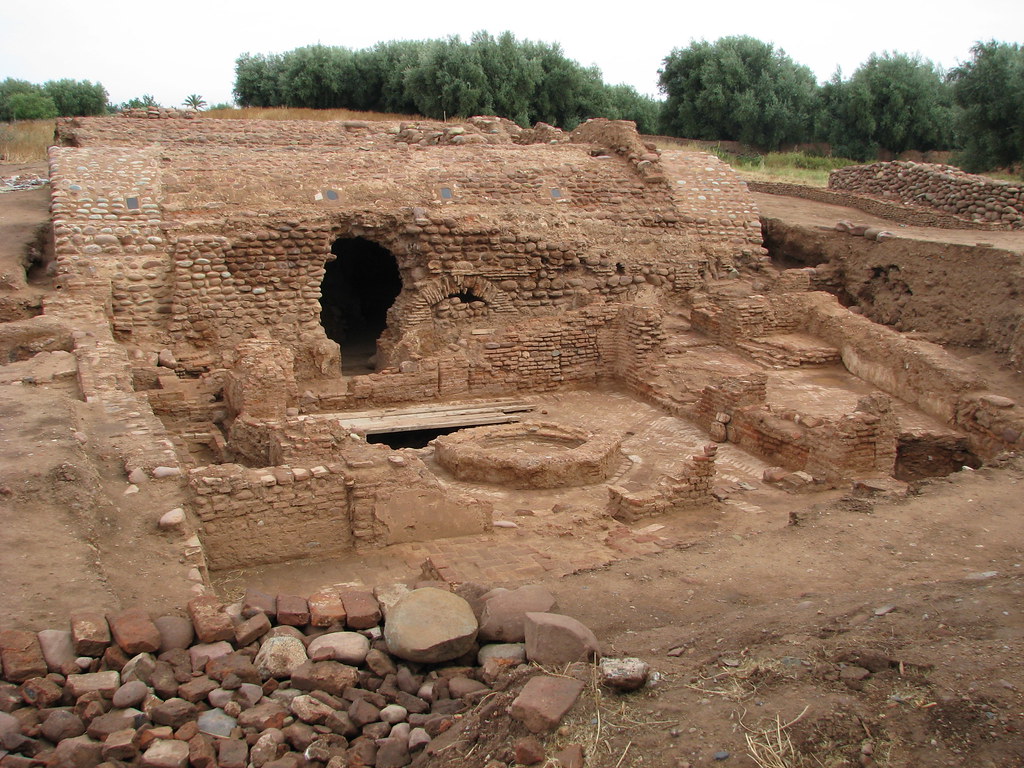 | |
| Credit: https://www.flickr.com/photos/exchangesphotos/5854294730/ |
The city was a key location for commercial, political, and religious exchange in the Middle Ages and despite the relocation of the capital to Marrakech in the eleventh century by the conquering Almoravids, Aghmat carried on as an important religious center and as a strategic link between the Sahara and the rest of Morocco.
For over ten years, Ronald Messier, Professor Emeritus at Middle Tennessee State University and Director of the Moroccan-American Project at Aghmat has been excavating four of the most important monuments in the central part of the city: the hammam (public bath), grand mosque, the adjoining ablution hall, and the royal palace. The excavations have elucidated Aghmat’s historical trajectory from independent city-state, to imperial capital, to major commercial-religious center and its significance to the history and culture of Morocco and western Islam.
FULL ARTICLE