Translate

Showing posts with label Western Sahara. Show all posts

Friday, May 21, 2021

Reading as an Act of Resistance ?

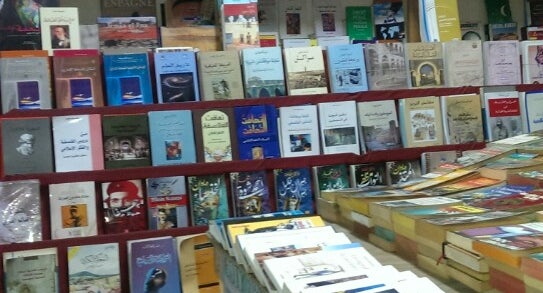
 Here is an article from  the Arab Weekly (Oct 2020) on publishers in Morocco trying to promote reading (and therefore buying books)  in conjunction with a celebration of the Green March

______________________________________________

Moroccan publishers promote reading as ‘act of resistance’

RABAT- The Union of Moroccan Publishers will launch an initiative titled “reading is an act of resistance” on November 6 to commemorate the 45th anniversary of Morocco’s Green March.

The Green March is a mass demonstration organised by tens of thousands of Moroccans in November 1975 to call on Spain to return the Western Sahara to Moroccan sovereignty.

“Publishers, readers, writers and everyone who is interested in books and reading are invited to participate in this initiative that will last until December 20,” the Union of Moroccan Publishers said in a statement.  

FULL ARTICLE

credit: Librarie Tazi (Casablanca, Morocco)


Tuesday, May 10, 2011

Ghosts of the Sahara: Photo Exhibition in NYC on the Exiled People of the Western Sahara


Here is an piece from The New Yorker on a exhibition of photos by Andrew McConnell showing Sahrawi refugees and discussing their forgotten (or ignored) plight. It is currently showing in New York City. Click on either of the links highlighted above to see the photos.
________________________________________
May 10, 2011
Living Ghosts: In Exile with the Sahrawi Bedouins
Posted by Caroline Hirsch

On a recent visit to the Half King gallery, I discovered Andrew McConnell’s thoughtful and poignant project on the Sahrawi Bedouins—now into their thirty-fifth year of exile from their native Western Sahara.

McConnell says: “In pursuing the Sahrawis’ story, what struck me more than anything else was how forgotten these people are. How is it possible, in the twenty-first century, for tens of thousands of men, women, and children to languish in refugee camps for three and a half decades—unknown? How can continuous U.N. resolutions and international laws be ignored and abused without censure? And how can human-rights abuses proceed unchallenged?”

McConnell decided to stage his portraits in the darkness: “I wanted to give a sense that this is one long night for the Sahrawis—lasting thirty-five years. My showing very little of the land emphasizes that the Sahrawis are landless. By lighting them simply and in darkness, I am trying to say, ‘Look! These people are here!’ Their statements are a grim rebuttal to international efforts in Western Sahara; the majority want a return to war. Finally, I wanted the viewer to see what I had seen: a people utterly forgotten, abandoned, hidden from the world’s consciousness—a people living as ghosts.”

Sunday, April 10, 2011

Stolen: A Film about Modern-Day Slavery in the Western Sahara


Here is a piece from popmatters.com about the newly released documentary film "Stolen," that talks about the uncomfortable reality of modern day slavery in the Western Sahara and other places in North Africa.
_____________________________________
'Stolen': Seeing More Possibilities
By Cynthia Fuchs 5 April 2011
PopMatters Film and TV Editor

You can’t change these ideas until you get out and see other possibilities.
—Tizlam

“Is it true my white grandmother beat you as a child?” asks 15-year-old Leil, Her mother, Fetim, looks at her hard, still chewing her lunch. They sit at a table, a TV behind them, as well as a doorway, open onto a bright white daylight. Leil continues, “Violeta already knows,” as the camera cuts to filmmaker Violeta Ayala, seated across from them. Her face turns cloudy as she listens: “You’ll be in trouble, by saying that we were beaten,” cautions Fetim. Again, the camera shows her instructing her daughter, “It’s always been that slaves are beaten from a young age.”

The scene breaks here, as Leil gets up to welcome a younger sibling inside, through that bright-lit doorway. And the film, Stolen, has changed. Before this moment, as Ayala has narrated, the documentary was observing preparations for a family reunion. Fetim had come to a refugee camp in the Algerian desert as a child some 30 years ago, leaving behind her Moroccan mother Embarka and her siblings. At first, Ayala says, she and Dan Fallshaw meant to film Spanish-speaking refugees in the Western Sahara, and felt lucky to have access to a family about to reunite, thanks to a program initiated in 2004 by the United Nations High Commission for Refugees that brings Moroccan family members to the camp for five-day visits. With some 27,000 on the waiting list, the fact that Fetim and Embarka have been selected seems miraculous.

And yet: this story is now reframed, as Ayala and Fallshaw learn that their subjects are not only refugees, but also slaves. The filmmakers can’t begin to guess at the complications that follow from this discovery.

Stolen—screening 5 April at Stranger Than Fiction, a co-presentation with the African Film Festival, and followed by a Q&A with Ayala and Fallshaw—charts their efforts to understand what they find. Their questions elicit astonishing and also cryptic stories, as Fetim and Leil, as well as Fetim’s cousin Matala, sort through what is safe to tell “the foreigners.” The storytelling process, as it unfolds on camera, is at once fascinating and alarming, as it becomes clear that saying “too much” is more costly for Fetim than her Australian visitors anticipate.

At the same time, the filmmakers’ parts in the process are also complex, as they are increasingly responsible for what they’re filming—whether by paying for part of the celebration for Embarka’s visit or by documenting stories told by Fetim and her family, descriptions of the system of slavery still in place in the camps and elsewhere. As the film reports, the Polisario Liberation Front, a nationalist organization backed by Algeria, have been fighting with Morocco over the Western Sahara for the last 34 years. Neither the Moroccan government nor the Polisario wants such stories documented. And yet, with at least 2 million black people living in slavery in North Africa, Stolen insists, telling such stories is only a first step.

Indeed, Fetim’s initial revelation that she has a “white mother,” Deido, surprises Ayala, who wonders how they ended “up together, with so much racism in the past?” Deido explains, sort of. “Saharan people are not all the same,” she says, her interview shot as she sits before a striking red tent wall. “Some of them buy black people and own them, others free them, but keep them as their family. We don’t talk about this anymore.”

Still, Ayala and Fallshaw find that some black Africans do talk about this, but only when they are alone together, and for a brief time, in front of the “foreigners.” The film pieces together bits of conversations, a fragmented structure that results from the filmmaking process per se, as the Polisario and then the Moroccans try to confiscate and at last steal their tapes. The effect of the fragments is to the point, however, as the stories are shared and whispered, then covered over or repressed, as experiences are acknowledged and then denied, as autonomy is named—in the form of “liberation,” as Deido says she has granted to Fetim—and then rescinded, when papers are withheld and daily life continues as such.

As Ayala and Fallshaw tell it—their own voiceovers working in tandem, finishing each other’s sentences—they’re struck by Fetim’s submission to Deido, her performance of chores and her lack of independence. Further, though no one will “speak about this,” they also discover that Embarka belonged to Deido’s father, and that she bore him several children. “Deido’s father fucked her,” says Fetim’s friend Jueda after Fetim becomes so unnerved by the conversation that she leaves the room. “That’s how the white girl Fatma was born,” Fatma being Fetim’s sister, still living with Embarka in Morocco.

A friend of Leil, Tizlam, is also outspoken concerning what it means to be a slave. “You’re just scratching the surface,” she says, her face at once poised and fierce in dim shadows. “They come and take the children and the parents can’t say anything, they have no rights.” Her grandmother concurs, and they seem willing to speak, though they don’t seem to expect a change. “There is no law for us,” Tizlam says, “What we want is for this not to exist. It should be erased, it should be from the past, not the present or the future.” Ayala and Fallshaw describe their growing concern, not only for their own safety but also for “all the people who trusted us with their stories.”

Their worries are well founded, as they are detained by the Polisario. The filmmakers bury their tapes in the desert—an apt and awful metaphor for the experiences they’ve heard about—and then escape to Paris, where they pursue the story, hoping to recover their material and make public what they’ve witnessed. A phone call with Leil reveals, however, that their own ambitions and hopes don’t matter much: Leil cries, “Trying to do good, you did bad. Now the police are all over us.” As Ayala ponders this notion in voiceover, that “without intending to, we got Leila and Fetim in a lot of trouble,” the film structure makes clear the problem: she’s in a hotel room, at a distance. None of us can know what Leil and Fetim are experiencing—off camera.

The film traces how Ayala and Fallshaw come to know the ongoing complexities of slavery. As it is denied by most North African regimes (in Mauritania, Mali, and Senegal, as well as Algeria and Morocco) and described here by Ursula Aboubacar, the Deputy Director of the United Nations High Commission for Refugees, as “a cultural issue that is existing.” That is, as Aboubacar puts it, the UN can only “combat” the practice by bringing it to the attention of local police forces, the Polisario included. Ayala is horrified by the lack of power wielded by the UN, or anyone else, it seems. Indeed, as Tizlam has said, “There is no law for us.”

The documentary makes this case forcefully. In addition to assembling interviews that officials and others have tried to keep quiet, it includes footage of a screening and audience responses in Sydney. The ethical questions here impossibly tangled: even after Fetim, Leil, and Deido withdraw their consent to appear in the film, Alaya and Fallshaw include not only their interviews, but also footage of Fetim at the film’s premiere (the Polisario, a note explains, “flew Fetim to Sydney to protest at the film’s premiere,” along with her husband). Her objections have led to other repressions, as the Swedish public broadcaster SVT-UR has pulled the movie from its schedule. While the truth remains elusive off-camera, Stolen insists that still more needs to be exposed, that documentation is indeed only a first step.

Thursday, November 11, 2010

Aminatou Haidar's Opinion on Motives Behind Morocco's Raid on Western Saharan Camp


Everyone has an opinion about what is going on in the Western Sahara. Here is a piece from the BBC with Aminatou Haidar's opinion about the recent violence.
_________________

Morocco 'raided Western Sahara camp to sabotage talks'


A prominent human rights campaigner has told the BBC she believes the clearing of a protest camp in Western Sahara by Moroccan forces could be classed as a crime against humanity.

Aminatou Haidar, nicknamed the "Gandhi of Sahara", said Morocco was deliberately escalating the clashes.

It was a tactic to block UN-sponsored talks on the territory, which was annexed by Morocco in 1975, she said.

At least eight people died in the violence on Monday.

Moroccan authorities have not reacted to Ms Haidar's comments - Morocco's London embassy told the BBC it was not entitled to comment on recent events in Western Sahara.

The region's pro-independence movement, the Polisario Front, said 11 people had been killed.

The Gadaym Izik camp was set up about a month ago outside Laayoune, the capital of the disputed territory, as a protest by displaced Sahrawi people about their living conditions. It was home to more than 12,000 people.

Polisario said Moroccan troops used live ammunition, tear gas and water cannon against thousands of people at the camp.

It overshadowed the negotiations between the two sides in New York, which ended on Tuesday with no breakthrough.

'Calculated'

Ms Haidar, who is in Portugal meeting local supporters of the Sahrawi people's campaign for self-determination, said it was not by chance that the violence had escalated when they did.

"Why is it that Morocco, which sits at the negotiating table, massacres the Sahrawi people on the eve of negotiations?" she told the BBC.

"This was well-studied, planned and calculated because the protest camp was there for already a month."

Polisario says at least 11 people died in the raid and more than 700 people were wounded and many others are missing.

The official Moroccan news agency says eight members of the security forces died.

Last year Ms Haidar came to international prominence when she went on hunger strike at Lanzarote airport after she was expelled to Spain's Canary Islands by the Moroccan authorities.

She had been trying to return to Western Sahara and refused to define herself as Moroccan on an official form.

Western Sahara, a former Spanish colony, is the scene of one of Africa's longest-running territorial disputes.

The phosphate-rich territory was annexed by Morocco after Spanish settlers left in 1975. Polisario fought a guerrilla war against Morocco until the UN brokered a ceasefire in 1991.

Rabat now offers to grant it autonomy, while Polisario is demanding a referendum on full independence.

The talks between both sites have been deadlocked for year.

The two sides have now agreed to meet again next month and in the New Year.

Monday, November 8, 2010

Moroccan Forces Raid Protest Camp in Laayoune


Here is an article from National Public Radio about the riots in Laayoune. Is the Sahara Moroccan? Good question.
___________________________________
5 Moroccan Troops, 1 Civilian Killed In W. Sahara

by The Associated Press

RABAT, Morocco November 8, 2010, 06:58 pm ET

Moroccan forces raided a protest camp in the disputed territory of Western Sahara on Monday and unrest spread to a nearby city, with buildings ablaze and rioters roaming the streets. Five Moroccan security officials and one demonstrator were killed, reports said.

Moroccan officials moved into the camp at dawn, reportedly using tear gas and pressure hoses to dismantle it. Once unrest reached the city of Laayoune, Spanish National Television showed black smoke pouring from at least four tall buildings and an explosion that sent flames into the air.

The chaotic scenes capped weeks of simmering tension in Western Sahara, where a local independence movement called the Polisario Front is locked in a conflict with Morocco, which claims the territory.

The unrest also came hours before the reopening of informal U.N.-sponsored talks Monday in Manhasset, New York, between Morocco and the Polisario Front, which long waged a guerrilla war on Morocco in a bid to gain independence for the desert region and its native Saharawi people.

The 35-year conflict over the impoverished territory has dragged on, despite United Nations' attempts to resolve it. Today, thousands of Saharawis live in Polisario-run refugee camps in Algeria, forced out of their homeland by the dispute.

The latest tensions started in mid-October, when some residents of Laayoune set up the Gdim Izik tent camp 10 kilometers (six miles) east of the city to protest poor living conditions. Monday's operation to dismantle it took less than an hour, according to Moroccan radio.

"It was a very forceful intervention," Galia Djimi, a Moroccan human rights activist in Laayoune, told The Associated Press. "People have been beaten. There are injured people."

The British charity group Sandblast described the operation as "brutal." It said the camp "reportedly came under a barrage of tear gas, flames and high temperature pressure hoses."

The Moroccan governor of Laayoune, Mohamed Guelmous, told TV Channel 2M that troops were met with a barrage of incendiary devices when they entered the camp to arrest people he called troublemakers.

Morocco annexed the territory after Spain gave it up in 1975. Today, Morocco refers to the Western Sahara, thought to be rich with minerals, as its "southern provinces." In a bid to settle the dispute, Morocco has proposed autonomy for the territory.

Morocco's official MAP news agency said five security officials were killed Monday — four in the operation at the camp, and one stabbed to death elsewhere — and said about two dozen others were hospitalized.

One protester died and hundreds of native Saharawis were allegedly injured, according to a statement by the Western Sahara government in exile carried by the Sahara Press Service. The government in exile is run by the Polisario Front.

Yet Moroccan officials insisted no civilians were killed in the raid, and the exact death toll was unclear.

The spokesman for the group that set up the camp, Brahim Ahmed, claimed camp residents had killed numerous members of the Moroccan security forces — as many as to 16, he said — by stoning them or running them over with cars. He said an unknown number of camp residents were killed.

Such claims have often varied widely in the conflict, and media access was limited. An AP photographer and several other journalists were prevented from boarding a plane to the area by an official of Moroccan airline Royal Air Maroc.

Schools and offices in Laayoune were closed Monday, and a cloud of black smoke rose above the city. An official in Laayoune told the AP that the local TV station and an office handling regional investments were set ablaze.

Video of the Laayoune protests on the cadenaser.com site of the major Spanish radio station showed streets filled with what appeared to be Saharawi men — many with their faces wrapped in cloth according to local custom. They moved chaotically through a street, some waving a Polisario flag, others carrying sticks and bottles.

There was no evidence in the video to match an account of the Laayoune protests carried by the official Moroccan news agency which said that demonstrators waved Moroccan flags, carried portraits of King Mohammed VI and shouted "The Sahara is Moroccan."

Friday, October 29, 2010

Morocco Suspends Al-Jazeera's Operations


Al-Jazeera's Moroccan operations have been suspended by the Moroccan authorities. Here is an article from Al-Jazeera's English language website that offers an analysis of the situation.
_________________________

Morocco curbs Al Jazeera operations

"Failure to follow rules of responsible journalism" cited by kingdom for withdrawing staff's press accreditations.
Last Modified: 29 Oct 2010 19:40 GMT


Morocco has suspended Al Jazeera's operations in the country by withdrawing the press accreditations of the network's staff based there.

The Moroccan communications ministry said in a statement on Friday that the sanctions followed "numerous failures in following the rules of serious and responsible journalism".

A government official who declined to be named said the authorities took exception "to the way Al Jazeera handles the issues of Islamists and Western Sahara".

The Moroccan statement, which was reported by the official MAP news agency, said Al Jazeera's broadcasts had "seriously distorted Morocco's image and manifestly damaged its interests, most notably its territorial integrity".

Al Jazeera had showed a "determination to only broadcast from our country negative facts and phenomena in a deliberate effort to minimise Morocco's efforts in all aspects of development and to knowing belittle its achievements and progress on democracy", the statement said.

Separatist movement

A former Spanish colony, Western Sahara was annexed by Morocco in 1975. The move was violently opposed by separatist Polisario fighters until the UN brokered a ceasefire in 1991.

Polisario wants a UN-organised referendum that would give the Sahrawi people three choices: attachment to Morocco, independence or autonomy under Moroccan sovereignty.

Morocco backs the option of broad autonomy for the territory, but rejects any notion of independence for Western Sahara.

"It's a very surprising decision from the government, especially because there was no legal background. It's just a very administrative and political decision," Vincent Brossel of Reporters without Borders told Al Jazeera from Paris.

He said that RSF "suspect that this decision is linked to the way your channel has been covering different issues, especially the Western Sahara, and I think it's mainly because you open your microphone to all sides, and not only the government's side".

"I think it's mainly because you are doing your job, which is quite unfair."

The government recently prevented a Spanish journalist from travelling to the Western Sahara, Brossel noted.

"It's unfortunately a sort of new trend in Morocco. When foreign media is doing its job, you can be in trouble".

Strained relations

In July 2008, Al Jazeera's Morocco bureau chief at the time, Hassan al Rashidi, was convicted for what the government called "disseminating false information".

Rachidi was charged with reporting that people were killed in clashes with security forces in the southwestern port city of Sidi Ifni on June 7 during a protest over poverty and rising unemployment.

Moroccan authorities rejected the reports of deaths, saying that 48 people were injured, including 28 police officers.

Although Al Jazeera reported the government's denial, the Rabat chief prosecutor’s office ordered an inquiry to determine how the false information was disseminated.

Rachidi was interrogated by the judiciary police for four hours and was charged on June 14 with publishing false information and conspiracy. Minutes later, the Moroccan communication ministry withdrew his media accreditation.

Rachidi avoided jail time but was fined nearly $7,000. The Moroccan government did not give any reason for this latest decision.

The trial and the confiscation of Rachidi's press accreditation further damaged the already strained relations between Morocco and the channel.

In May 2008, Morocco suspended Al Jazeera's daily television news bulletin covering the Maghreb countries [Morocco, Algeria, Tunisia, Libya and Mauritania] from its studios in Rabat.

The decision, according to Khalid Naciri, the Moroccan communication minister and spokesman for the government, was due to technical and legal issues.

More than 2,000 alleged political activists have been arrested and sentenced in Morocco since the Casablanca bombings of May 16, 2003.

Saturday, December 26, 2009

More of the Same : Morocco Puts Aminatou Under House Arrest


Here's the Latest from the Western Saharan drama - a Reuters article about Aminatou Haidar placement under house arrest by Moroccan authorities.
_______________________________________


W.Sahara activist is under Moroccan house arrest
Thu Dec 24, 2009 5:55pm IST


By Zakia Abdennebi and Lamine Chikhi

RABAT/TINDOUF (Reuters) - Western Sahara independence activist Aminatou Haidar said Moroccan police had surrounded her house and kept her under house arrest since her return to her desert homeland after a hunger strike in Spain.

She vowed to step up her struggle for human rights in the former Spanish territory despite what she called Moroccan repression.

Moroccan officials said Rabat was committed to respecting human rights in Western Sahara and elsewhere in the country. They declined to comment further on Haidar's case.

A tract of desert the size of Britain which has lucrative phosphate reserves and potentially offshore oil, Western Sahara is the scene of Africa's longest-running territorial dispute.

Last week, Haidar, a 43-year-old mother-of-two ended a month-long hunger strike in a Spanish airport in protest at Rabat's refusal to let her back into Western Sahara unless she declared her loyalty to the Moroccan king.

Morocco let her return home after the United States, Spain and other countries intervened.

Haidar's fasting focused international attention on Western Sahara's dispute in a way rarely seen in the 35 years since Morocco annexed the territory after Spain pulled out.

"The siege in continuing. I'm under house arrest. Family members and neighbours have problems visiting me. Shops in my neighbourhood are suffering from the siege," Haidar told Reuters by telephone from Rabat late on Wednesday.

Reuters reporters travelled to Laayoune, Western Sahara's main city, to interview her at her home but security forces blocked access. Other journalists have also been prevented from meeting Haidar.

"CARROT AND STICK"

"I have the courage of my conviction to carry on with the defence of the cause of self-determination of the Sahrawi people. I will never waver despite the threats of jail, abduction, torture and exile," she added.

She accused Morocco of having a "carrot-and-the stick" policy towards Algeria-based Polisario Front and the Sahrawis in the territory.

"Morocco represses the Sahrawi population while it is negotiating with the Polisario Front," added Haidar.

Morocco said it is ready to resume negotiations with the Polisario on a deal on the future of the territory. Rabat has offered autonomy.

The Polisario, which seeks an independent state in the territory, also wants the talks to resume but it insists that Rabat halts what it called its widespread abuses of human rights in Western Sahara.

Haidar has become of "symbol of a nation" for Sahrawis in Western Sahara as well as in refugee camps in the Algerian southwestern area of Tindouf.

"She is our Mandela, our Gandhi," 37-year-old Gani Minatou told Reuters while she was making sweet tea inside her tent in a refugee camp.

Many Sahrawis see her hunger strike as breathing a new life into their cause.

"Before Aminatou, the cause reached a deadlock. There was no hope for a solution. But Aminatou's action put back the Western Sahara's issue at the top of the international agenda," Sahrawi journalist based in Tindouf El Bachir El Dhif told Reuters.

© Thomson Reuters 2009 All rights reserved

Saturday, December 19, 2009

Morocco Yields to International Pressure - Aminatou Haidar Returns Home to Western Sahara


Alhamdulilah. Aminatou Haidar is back at home in the Western Sahara. Here is an article from Reuters Africa about what her silent victory over Moroccan officials means.

______________________________________________

Morocco yields to pressure, activist back home
Sat Dec 19, 2009 8:32am GMT


By Lamine Ghanmi

RABAT (Reuters) - A Western Sahara independence activist returned home on Friday after a hunger strike at a Spanish airport, defusing a diplomatic spat between Spain and Morocco and potentially strengthening separatist campaigners.

Aminatou Haidar went on hunger strike 32 days ago after Moroccan authorities refused her entry when she returned home from a trip abroad, confiscated her passport and put her on a flight to Lanzarote, one of Spain's Canary Islands.

After returning to Western Sahara's capital Laayoune on a special flight, Haidar said she had made no concession to Morocco to obtain the right to return.

"There were no conditions. My positions cannot be sold at auction," she told French television channel France 24 by telephone, speaking through an interpreter.

Rabat had initially refused to accept Haidar, who is campaigning for Western Sahara's independence from Morocco, back unless she swore loyalty to King Mohammed. The king's father took control of most of Western Sahara in 1975 after Spanish colonial forces withdrew from the territory.

A Moroccan analyst said Rabat let Haidar return to her desert homeland after international pressure and could now be forced to make concessions to the independence movement.

"Morocco gave in to the pressure in Spain, Europe and the United States. It accepted her return after they pushed themselves in a corner by stressing they would not let her back," said Ali Anzoula, an editor of the daily Al Jarida al Oula.

Anzoula, who writes about the Western Sahara conflict, said the Polisario Front may seek to win more concessions from Rabat in future rounds of U.S. sponsored peace talks, such as a U.N. role in monitoring human rights issue in the territory.

The Moroccan government says Haidar was allowed back home out of "the country's tolerance and generosity" and after several states intervened on her behalf.

France, the United States and several other Western states worked to help Haidar return home.

IMAGE "STAINED"

Left-leaning Spanish daily El Pais also said the crisis would weaken Rabat's stand in negotiations with Polisario over the future of the territory.

"Morocco has seriously weakened the credibility of its proposal of the autonomy of Western Sahara with its treatment of Haidar," wrote El Pais in reference to Morocco's offer to give Western Sahara autonomy rather independence as claimed by Algerian-backed Polisario Front.

As Haidar's health deteriorated, her hunger strike became an embarrassment for both Rabat and Madrid, which rely on each other to help fight illegal immigration and drug trafficking.

Human rights groups abroad said her case showed Morocco's pledges to improve its human rights record were hollow. Media and the opposition accused Spain's government of incompetence by allowing the Moroccans to send her to Spain.

"The Spanish government has handled this crisis badly, but much worse has been the behaviour of the regime in Rabat which caused the problem by violating her human rights," said the right-leaning Spanish newspaper El Mundo.

Taoufik Bouachrine, editor of Morocco's leading Akhbar al Youm al Maghribia daily, said the hunger strike "stained" Morocco's human rights image abroad.

"Morocco's government leaders failed to understand that the most sacrosanct issue now in the world is the respect of human rights. They put Morocco's sovereignty first and collided with its main partners abroad on the rights question," he said.

But for sympathisers of the Polisario Front in Western Sahara, there was no doubt that Haidar won a battle against Rabat's government.

"Her return is a great victory and by her coming back she had defeated Morocco's campaign to prevent her from living in her homeland," said Mohamed Moutawakeel, a member of the Sahrawi rights group Codesa which is chaired by Haidar.

© Thomson Reuters 2009 All rights reserved

Thursday, December 10, 2009

Not Bowing to the Moroccan King


I generally don't post on consecutive days, but this letter posted in the Guardian is quite a read. Let's not pretend the Western Sahara issue is clear cut, this is just one of many voices.
__________________


Comment is free

We will not bow to this Moroccan king

Hunger striker Aminatou Haidar must have justice. Begging Morocco's rotten monarch won't bring it

Paul Laverty and Ken Loach
Thursday 10 December 2009 21.30 GMT


A woman from Western Sahara, Aminatou Haidar, lies on the floor at Lanzarote airport on hunger strike and near death. She was refused entry to her own country because she refused to write "Moroccan" on her departure card. She is denied access to her two children in her home town of El Ayoun, under Moroccan control. The international court of justice has declared that Western Saharans have the right to self-determination. The country is illegally occupied by Morocco. Yet Haidar was stripped of her passport and arbitrarily dumped on a plane to Spain.

We were asked to add our names to a letter signed by many brilliant writers, artists, politicians and trade unionists addressed to the King of Spain, urging him to intercede with King Mohammed VI of Morocco so that somehow Haidar's life can be saved. While we respect the goodwill of all, understand that we are all desperate to avoid a tragedy, and indeed hope in our heart of hearts it succeeds, we believe it is less than satisfactory. This initiative does highlight, however, one essential fact: King Mohammed is the figure with real power in Morocco. The letter, in essence, pleads with the King of Spain to plead with the King of Morocco to do us all a "favour" and sort out this mess. If only, and good luck.

It is time for some clarity and less tugging of the forelock. Mohammed VI is estimated to be worth $2bn by Forbes magazine, and judged the eighth richest monarch in the world. According to the Wikipedia entry, Mohammed and his family have vast commercial interests in mining, food processing, retail and financial services. In addition, the palace's daily operating budget is astronomical. Irrespective of Mohammed's great personal fortune, and his huge influence over the country's political institutions Morocco is a state that has signed international treaties with binding obligations. By ignoring these international standards, human rights law and the international court of justice, Mohammed VI is behaving like some medieval despot.

Mohammed VI's foreign policy is crude and stinks to high heaven. The subtext to any challenge is to threaten Spain with unleashing untold numbers of desperate, impoverished Moroccans across the straits into Europe. Or worse, to stop co-operating on questions of "terrorism". In other words, turning a blind eye to Islamic fundamentalists.

The king is a hypocrite. In June 2000 he received an honorary degree from The George Washington University "for his promotion of democracy in Morocco". He should be stripped of this honour. In a speech on 4 November he stated that "one is either a patriot or a traitor" thereby condemning all who refuse to accept Moroccan sovereignty over Western Sahara and backing repression over peaceful resistance.

Mohammed VI's officials demand, as a condition of return of her passport, that Aminatou Haidar apologise to the king for the temerity of describing her homeland as Western Sahara instead of Morocco on a form. This, from a woman who was tortured and disappeared for four years in a secret detention camp. She was blindfolded, gagged, beaten, inflicted with electric shocks, and threatened with rape. If Mohammed VI had an ounce of humanity, he would beg for her forgiveness.

The great tragedy is that, while many parts of the Muslim world are steeped in violence and desperation, and while many parts of the African continent are blood-soaked, in the middle of all this, is Aminatou Haidar, a frail figure committed to non violent resistance.

We hope there will be an alternative letter presented to Mohammed VI, before Haidar dies, signed by citizens the world over (including the elected prime minister of Spain, Mr Zapatero), demanding the king and his government respect international law and join the civilised world.

As we think of this little man in his big palace, by his phone – all it would take is one call to give Haidar back her passport and allow her to join her two heartbroken children – we are reminded of ancient Roman emperors holding out a thumb to decide captives' fate. While Mohammed VI may feel all-powerful in his luxurious surroundings, if he had one flicker of imagination and a sense of history, he would realise that if he allows Haidar to die, her crystal spirit of peaceful resistance will dwarf his shallow-minded cruelty wherever he goes for the rest of his life. If there is any justice, he will be treated as George Bush was by the shoe thrower of Baghdad, and become a Royal Persona Non Grata to the civilised world. We do not plead favours as conjured up in private by two kings. We demand justice, as human beings.

Sunday, December 6, 2009

Morocco Wants an Apology


Here is a short piece from the Guardian about the "problem" Morocco is having with Western Sahara activist Aminatou Haidar. God help her.

__________________________________


Morocco: Deal for hunger striker's return is delayed


Associated Press
The Observer, Sunday 6 December 2009


Spain's deputy prime minister, María Teresa Fernández de la Vega, has said it is in negotiations with Morocco over the return of a prominent Western Sahara independence activist who has been on hunger strike for 20 days.

Aminatou Haidar has been camped at Lanzarote airport since 14 November, when Morocco stripped her of her passport and flew her out after she refused to acknowledge Moroccan sovereignty over Western Sahara, a former Spanish colony. Late on Friday an agreement appeared to have been reached and the 43-year-old boarded a jet to return, but Morocco denied it landing rights minutes before take-off, her lawyer said.

Last night Morocco stated that Haidar will not be allowed back unless she makes a formal apology to the king.

Tuesday, November 17, 2009

Moroccan Police Use Demand For "Prior Permission" to Stop Visits to Sahrawi Activists


Here is a press release recently posted by Human Rights Watch about the treatment of Sahrawi activists by Moroccan authorities. They won't stop until somebody in the West tells them to stop. And let us not overlook the recent expulsion of Sahrawi activist Aminatou Haidar by Morocco to Spain where she is not being permitted to leave.
______________________________________


Morocco/Western Sahara: Reverse New Rule on Sahrawi Activists’ Contacts
Police Use Demand for Prior Permission to Break Up Visits by Foreigners

November 16, 2009


"A country that prides itself on openness is now telling some citizens that they can't decide who may visit them...This is an unacceptable restriction on the right of association and the right to privacy."
Joe Stork, deputy Middle East and North Africa director

(New York) - Morocco is taking another regressive step on human rights by blocking "unauthorized" visits by foreigners to the homes of Sahrawi activists in Western Sahara, Human Rights Watch said today.

Since October 19, 2009, police have interrupted five such visits by Spanish journalists and human rights lawyers, telling them in each case that these visits they require prior clearance from the authorities.

This practice, which has no apparent basis in Moroccan law, represents a new restriction on the rights of Sahrawis and of visitors to the region. Previously, plainclothes police generally did not interfere when foreigners entered the homes of known Sahrawi activists, although they often openly monitored such visits from a distance.

"A country that prides itself on openness is now telling some citizens that they can't decide who may visit them," said Joe Stork, deputy Middle East and North Africa director at Human Rights Watch. "This is an unacceptable restriction on the right of association and the right to privacy."

Restrictions on visits to the homes of Sahrawi activists coincide with a visibly tougher posture by Moroccan authorities toward those who advocate self-determination for the contested Western Sahara. Morocco has exercised de facto rule over the former Spanish colony since 1975 and considers it an integral part of Morocco. Other states have not formally recognized this claim.

Seven Sahrawis have been in detention since returning October 8 from a visit to the Sahrawi refugee camps in Algeria that are administered by the Polisario Front. The Polisario is a pro-independence movement that contests Moroccan sovereignty and demands a referendum on self-determination for the people of Western Sahara. Moroccan authorities accused the detainees of harming "external state security" and referred their cases to a military court, a rare and ominous development for civilian defendants.

King Mohammed VI himself has signaled the new tone toward Sahrawis who favor a vote on self-determination and who, effectively, question Morocco's claim of sovereignty over Western Sahara.

"One is either a patriot, or a traitor," the king declared on November 6, the 34th anniversary of Morocco's "Green March" to take control of the region. "Is there a country that would tolerate a handful of lawless people exploiting democracy and human rights in order to conspire with the enemy against its sovereignty, unity and vital interests?"

The foreign visitors who were forced to leave the homes of Sahrawis in the recent incidents were Spanish journalists and lawyers who traveled to Western Sahara to observe the trials of Sahrawis and to collect human rights information.

In the most recent incident, on November 12, Luis Mangrané Cuevas, a lawyer representing the General Council of the Spanish Bar Associations (Consejo General de la Abogacía Española, CGAE) tried to visit Sultana Khaya, vice president of the Forum for the Future of Sahrawi Women, at her home in Boujdour. Mangrané had come to the region in order to observe the trial of Sahrawi activist Hassana Alouate.

Police intercepted him near Khaya's house and said he would need authorization to enter. At the police station they told him he could meet with Khaya instead in a café. But when the two sat down in a café to talk, policemen arrived, ordered Mangrané to leave Boujdour and escorted him to a taxi station, where he boarded a taxi to El-Ayoun.

The details of the four previous incidents are as follows:

On November 10, at about 7:30 p.m., Mangrané and Dolores Travieso Darias, another Spanish lawyer sent by the GCAE to observe a trial, visited Hassan Duihi at his home in El-Ayoun. About 30 minutes later, plainclothes police came to the door and told Duihi, a member of the Sahrawi Associaton of Victims of Grave Human Rights Violations (ASVDH) who frequently receives foreign visitors, to ask the two lawyers to leave his home and return to their hotel. The police told Duihi that he must obtain prior clearance from the police for any foreigners he wants to have visit him at home.

On November 3, at about 9:10 p.m., six plainclothes policemen came to the home of El-Ghalia Djimi, vice-president of the ASVDH, in El-Ayoun, during a visit by two Spanish lawyers. The lawyers, Ines Miranda and Araceli Fernàndez de Córdoba Cantizano, were in town to observe the trial of Sahrawi activist Cheikh Amidane, on behalf of the International Association of Jurists for Western Sahara, which is based in Spain. The police told the lawyers they had to get permission to visit homes from the Communications Ministry and ordered them to leave the house. Djimi had been receiving for years at her home foreign visitors interested in human rights without first notifying the authorities. Officials have now told her that she must get permission from them in advance when she wishes to have foreign visitors.

On October 22, plainclothes police told two Spanish journalists, Beatriz Mesa of Radio Cope and El Periodico and Erena Calvo of Ser Radio and El Mundo daily, to leave the home of Sidi Mohamed Daddache, president of the Committee to Support Self-Determination in Western Sahara (CODAPSO), in El-Ayoun. Both reporters are based in Morocco and accredited by Moroccan authorities.

On October 19, plainclothes police came to the El-Ayoun home of Hmad Hammad, vice president of CODAPSO, and ordered Ruth Sebastien Garcia and Simplico del Rosario Garcia to leave. The two Spanish lawyers had come to El-Ayoun in order to attend the trial earlier that day of Sahrawi student activist Mohamed Berkane.

On three research missions between 2005 and 2007, representatives of Human Rights Watch visited many private homes in El-Ayoun and Smara, including those of Sahrawi activists. While plainclothes police frequently were visible observing the homes from a distance, they did not interrupt these visits.

"Human rights activists, like everyone else, should be free to receive and visit whom they wish, without getting permission," said Stork. "Authorities who restrict that right look like they are trying to cut off the flow of information about their own practices."

Thursday, November 5, 2009

A Corner of the Desert Called Home - but is it Morocco or Not?


Please excuse us if we ignore all of the big celebrity visits to Morocco and post this article from Le Monde Diplomatique's English Edition about a Saharan artist, Aziza Brahim, who sings poems written by her grandmother in Hassaniya Arabic about the struggle for Saharan autonomy. ( I think there is a typo in the article. Her grandmother's name is most likely Bint Mabruk and not Mint Mabruk) If you click on the link, there is video.
_________________________________


From Sahara exile to future freedom


A corner of the desert called home


Aziza Brahim, the Sahrawi singer, relays to the world the sorrows and the protest of her people. But her work is not just political: she sings, too, of love and life

by Colin Murphy

Three images of Aziza Brahim come to my mind: cross-legged on the floor of an adobe house in the Sahara, swathed in a traditional melfa, talking politics; legs dangling over the stage of the extraordinary Roman amphitheatre in Merida, Spain, singing to an accidental audience of daytripping tourists; and in foul temper and hoarse voice over lunch in London, a late night behind her and a nerve-inducing concert ahead.
Aziza Brahim sings La Sensación Del Tanque in Merida, Spain

Let’s start with the last image: Aziza Brahim, whose short album Mi Canto topped the World Music chart on the influential 
eMusic.com earlier this year, was in London at the behest of the city’s annual African Music Festival. Backstage at the Queen Elizabeth Hall later that day, a procession of eager young aficionados sought a few minutes with Brahim. Their enthusiasm was not simply for her music, however; some seemed barely acquainted with it. What they proclaimed was passion for her cause.

Brahim rewarded them, from the stage, with the concise proclamations of her politics that introduced each song. She carried a flag onstage with her, and spoke of a homeland enriched with the blood of the fallen. After the concert she talked business, in private, with representatives from a couple of small World Music labels.

That was this summer. So was the impromptu visit to Merida, a pit-stop on the long drive north, from an open-air concert in Seville, to her hometown of León. The day was hot, and Merida offered a timely break from the languor of the road. Brahim walked alone into the vast, empty Roman auditorium and swung herself onto the stage, perching at the centre, in its heart. She started to sing, and the auditorium filled with a song of war, of family and of the desert. She brought to the ancient Roman theatre a music whose antecedents had perhaps once been heard at the southern fringes of the Roman Empire. There were no proclamations of politics, and she returned to the road, refreshed.
Coming home

In October, after a summer of successful concerts across Spain and elsewhere in Europe, Aziza Brahim took a break. She flew to Algiers and then took an internal Algerian flight to Tindouf, in the west, near the border with Morocco. She was collected there by a friend, and they drove south, in a jeep. They passed through a military checkpoint that indicated they were leaving Algeria, though they were not near the international border, and then through another checkpoint, apparently unmanned, that signalled they were entering new territory. They left the road and drove across the desert, and arrived shortly at a house of rough cement-and-adobe walls with an iron sheeting roof and light radiating from small windows, low to the ground. It was three in the morning.

The steel door to the house opened with the approach of the engine, and children streamed out, followed by their parents. Inside, a long, low table was laid with plates of dates and biscuits, and music played on an old stereo powered by a car battery. Brahim greeted everyone, and introduced her sleepy three-year-old daughter: cousin, niece and granddaughter to the people who crowded around. A party started, and finished just before dawn with the family strewn on cushions and carpets throughout the house. Aziza Brahim was home.

When Aziza Brahim speaks of her pueblo, this is what she means: her people, who live here, in the Hammada of the Sahara. Brahim was born here 34 years ago. But when she speaks of her patria, she does not mean this place. She means another corner of the desert, some hundreds of kilometres to the west: one that is less arid, and far more developed; and one that is not within Algeria, but is – currently – within Morocco.

Aziza Brahim’s people are the Sahrawis of Western Sahara; Western Sahara was once known as Spanish Sahara and is today – depending on who you listen to – either a province or a colony of Morocco. Morocco claims historical, pre-colonial sovereignty over the territory (which has rich phosphate deposits and fishing waters) and has occupied it since the Spanish withdrawal in 1975; but the Sahrawis’ claim on their land is vindicated by an International Court of Justice ruling from 1975, stating that the territory has the right to self-determination.
Moroccan offensive

Following that ruling, King Hassan II of Morocco mobilised 350,000 people to march south into Western Sahara in an ostensibly peaceful conquest, known as the Green March; at the same time, but more discreetly, he sent in the army. Many of the Sahrawis fled east, across the Algerian border, where they congregated in refugee camps. Morocco fought the Sahrawi liberation army, the Polisario Front, till 1991 when a ceasefire was agreed pending a referendum on the territory’s status. United Nations peacekeepers came in to supervise the referendum; they are still there; the referendum has still not happened. Morocco has successfully stalled.

The refugee camps have become institutionalised, and are home to the Polisario government in exile. There is a basic administration in the refugee camps, some paltry free enterprise, and almost no formal employment. The Sahrawis survive thanks to humanitarian aid and remittances from the diaspora, like Brahim.

Returning home is a luxury Brahim does not afford herself often: this was the first visit in three years. She spent the week almost entirely around the family home; they danced at night to Mauritanian pop, shopped for melfas, brewed and drank endless small glasses of mint tea, and got to know each other’s young children who played together, barefoot, in the dust. One of the older children transferred a MP3 copy of one of Brahim’s songs to her mobile phone, and it was soon jumping from phone to phone around the camp, via bluetooth.

One afternoon during the week, Brahim brought us next door, to the home of her grandmother, Ljadra Mint Mabruk. Brahim’s grandfather had died earlier this year and her grandmother was in mourning. She was unable to leave the house or receive male visitors. Instead, she hung a muslin curtain across her room, and allowed us sit with Brahim on one side, while she talked to us from the other. Her silhouette was visible through the curtain, jabbing with her finger or waving her arms when she talked of her granddaughter’s music.

Ljadra Mint Mabruk is one of the most renowned Sahrawi poets. Known as “the poet of the rifle”, her war poems have become anthems of the Sahrawi struggle – anthems to which her granddaughter has given new voice, and new rhythm: many of Brahim’s songs are versions of her grandmother’s poems, performed in a fusion of traditional Sahrawi singing and western blues-rock. Brahim’s signature song, La Sensación del Tanque (the feeling of the tank), is a poem by her grandmother that describes the feeling of climbing into a captured Moroccan tank, imagining what had taken place inside it.

Composed orally in Hassaniya, the Arabic dialect spoken by the Sahrawis, Ljadra Mint Mabruk’s work has been little published and less translated (Brahim sings them in Hassaniya). One untitled poem, translated into Spanish by the Sahrawi writer Bahia MH Awah, concludes with the following lines: “We will show them that the Sahara is not Agadir/ Nor Casablanca/ It is simply the Sahara/ A people that aspires to their freedom/ And has pursued it across a century.”
Fighting through poetry

“I never thought that my poetry would be put to blues or rock”, said Ljadra Mint Mabruk (through Brahim’s translation). “They put them on the radio or on the television now, though I never thought of these things when I wrote them. Of course, the circumstances in which they were written limited their impact, but my intention when I wrote them was that they could be listened to wherever. I want what I write to reach as many people as possible.”

“She always wanted to fight through her natural medium, poetry”, said Brahim of her grandmother. That fight is one Brahim continues, relentlessly. “While my people are oppressed, and condemned to live in refugee camps, I am not going to stop”, she said. “I am going to try and bring the sorrows and protest of my people everywhere I go. I am very proud to be Sahrawi, to represent my cause.”

For now, Brahim represents that cause from a base in León, using her music to promote the cause even as the cause helps draw attention to the music. For Salek Baba Hassena, the minister for co-operation in the Polisario government, Brahim is well placed as a spokesperson.

“She represents the generations who were born, grew up and were educated here in the camps”, he said. “She represents the stages of exile and of the first years of the camps – the hardest years, the years of the war – and she has also lived through the stage since 1991, following the ceasefire, awaiting the referendum. And I hope she will live through the stage of liberty and independence.” From exile to future freedom, he said, her modernised Sahrawi music “encompasses these different stages”.

That freedom, he said, was “inevitable”. “The day of victory is certain. We are sure that this day will arrive – perhaps not soon, but it is guaranteed to come.”

I asked Brahim what she would do when that day arrived. “When my country is free, I will return and live there with my people”, she said, “and sing to them of other things: of daily life, of love and loves lost; of things I can’t sing of today, because they don’t mean anything to me, for now.”

Yet even though, for now, her music is intimately bound up with politics, Brahim is too complex a musician, and too ambitious a singer, for her music to be the slave to a cause. Politics, for her, is ultimately about her people, and her family: as on that hot afternoon in Merida, it transcends the specificity of their struggle; the lament becomes uplifting.

And if a nationalist music is characteristic of modernity, Brahim is in other ways post-modern: she has multiple identities that allow her to slip seamlessly between the starkly different worlds through which her family and her music take her. These are the different images of Aziza Brahim. Any one of them is merely a snapshot. The thing that unites them is her song.

Monday, June 1, 2009

The Amnesty International 2009 Report on Morocco and the Western Sahara


Here is an article from the American Chronicle that gives some detail from the latest Amnesty International report on the state of things in Morocco. I doubt that anyone will agree with the report in its entirety, but its nice to be able to see the "big picture."

__________________________________________________

Amnesty Int´l Report 2009 on Morocco Imposes UN Action to Liberate Occupied Western Sahara

Dr. Muhammad Shamsaddin Megalommatis
May 31, 2009

The Amnesty Int´l Report on Morocco reveals the urgent need for UN Security Council measures and action in order to liberate the Occupied Western Sahara from the Moroccan Pan-Arabist tyranny. I therefore republish it integrally.

Amnesty International Report 2009 – Morocco and Occupied Western Sahara

http://thereport.amnesty.org/en/regions/middle-east-north-africa/morocco

Portrait

Head of state: King Mohamed VI

Head of government: Abbas El Fassi

Death penalty: abolitionist in practice

Population: 31.6 million

Life expectancy: 70.4 years

Under-5 mortality (m/f): 42/28 per 1,000

Adult literacy: 52.3 per cent

Amnesty International Report 2009 – Morocco and Occupied Western Sahara


The rights to freedom of expression, association and assembly continued to be restricted. Criticism of the monarchy or views contradicting the official position on other politically sensitive issues were penalized. The authorities used excessive force to break up antigovernment protests. Proponents of self determination for the people of Western Sahara were harassed and prosecuted.

Allegations of torture were not investigated, and victims of past human rights violations were not granted effective access to justice. The authorities continued to arrest, detain and collectively deport thousands of foreign nationals. At least four people were sentenced to death, but the government maintained a de facto moratorium on executions.

Background

In March, UN-mediated talks on the Western Sahara between the Moroccan government and the Polisario Front, which calls for an independent state in Western Sahara and runs a self-proclaimed government-in exile in refugee camps in south-western Algeria, ended in stalemate. Morocco insisted on an autonomy plan for the territory annexed in 1975, while the Polisario Front called for a referendum on self-determination, as agreed in previous UN Security Council resolutions. The UN Security Council extended the mandate of the UN Mission for the Referendum in Western Sahara until 30 April 2009. The mandate makes no provision for human rights monitoring.

In October, the EU and Morocco agreed an "ambitious roadmap" towards granting Morocco "advanced status" with the EU, including closer security, political, trade and other co-operation. Among recommendations made by several states when Morocco was considered under the Universal Periodic Review process in April were harmonization of national law with international standards and respect for migrants´ rights. However, the issue of impunity for torturers was not raised.

Repression of dissent


Critics of the monarchy

Criticism of the monarchy remained taboo. Human rights defenders, journalists and others were prosecuted for expressing views that the authorities deemed offensive to the King and the royal family.

In February, the Court of Cassation confirmed prison terms imposed on three members of the Moroccan Association for Human Rights (AMDH) for "undermining the monarchy" by participating in a peaceful protest in June 2007. In April, they and 14 other AMDH members accused on similar grounds were granted a royal pardon.

In September, the Court of Appeal in Agadir overturned on procedural grounds the two-year prison sentence against blogger Mohamed Erraji. He had been convicted of "lack of respect due to the King" after writing an online article suggesting that the King encouraged a culture of economic dependence.

In November, the Court of Appeals in Marrakesh upheld the conviction of Yassine Bellasal, aged 18, for insulting the King but suspended the one-year prison sentence imposed by a lower court. He had written on a school wall "God, the Nation, Barça" – the last a reference to the Barcelona football team– in a play on words of the country´s motto "God, the Nation, the King".

Excerpt:

"Security forces used excessive force to disperse antigovernment demonstrations..."

Sahrawi activists

Sahrawi human rights activists continued to face harassment, including politically motivated charges, restrictions on movement and administrative obstruction to prevent their organizations´ legal registration.

Ennaâma Asfari, co-President of the Committee for the Respect of Freedoms and Human Rights in Western Sahara, who lives in France, alleged that he was tortured by Moroccan security forces when he was detained while visiting the region in April. The authorities did not investigate his allegations and he was convicted of violent conduct and jailed for two months.

Brahim Sabbar, head of the Sahrawi Association of Victims of Grave Human Rights Violations Committed by the Moroccan State (ASVDH), was told by the security authorities that he should not visit areas in Laayoune in which other ASVDH members live after he was released from prison in June.

Hundreds of Sahrawis suspected of demonstrating against Moroccan rule or distributing pro-Polisario Front materials were arrested. Some were released after questioning; others were tried on charges of violent conduct in proceedings that were reported not to have complied with international standards of fair trial. Many complained that they were tortured or otherwise ill-treated by security forces during questioning and that information allegedly obtained under torture was used as evidence in convictions.

In October, Yahya Mohamed Elhafed Iaazza, a member of the Collective of Sahrawi Human Rights Defenders, was found guilty of violent conduct and sentenced to 15 years´ imprisonment in connection with his participation in a protest in Tan Tan against Moroccan rule. Eight other defendants received sentences of up to four years in prison. Allegations that they were tortured during questioning were not investigated.

Al-Adl wal-Ihsan activists


Hundreds of members of the unauthorized political organization Al-Adl wal-Ihsan were questioned by police and at least 188 were charged with participating in unauthorized meetings or belonging to an unauthorized organization. The trial of the group´s spokesperson, Nadia Yassine, charged in 2005 with defaming the monarchy, was postponed.

Excessive use of force

Security forces used excessive force to disperse antigovernment demonstrations, highlighting the failure of the authorities to implement a key recommendation of the Equity and Reconciliation Commission (IER). Established in 2004 to look into grave human rights violations committed between 1956 and 1999, the IER called in 2006 for improved regulation of the state´s security organs.

On 7 June, security forces were reported to have used excessive force to end a blockade of the port of Sidi Ifni established by protesters on 30 May. The security forces reportedly fired rubber bullets and tear gas, and used batons and police dogs. They also conducted unauthorized raids on homes, confiscated property, verbally and sexually harassed people, and carried out arbitrary arrests and detentions. Subsequently, 21 people, including four members of the Moroccan Centre for Human Rights (CMDH), were charged with violent conduct. A report by the parliamentary commission established on 18 June to investigate the Sidi Ifni events was made public in December. While affirming that the security intervention was justified, the report outlined a number of abuses committed by law enforcement forces, including violence against individuals. It called on the authorities to identify and bring to justice all citizens and members of the security forces responsible for illegal conduct and human rights abuses. To Amnesty International´s knowledge, no law enforcement officer had been charged by the end of the year.


In July, Brahim Sabbaa Al-Layl, a CMDH member, was imprisoned for six months after stating in an interview with Al Jazeera television that people had been killed and raped in Sidi Ifni. The journalist who interviewed him had his press accreditation withdrawn by the authorities and was ordered by a court to pay a heavy fine.

Security forces were reported to have used excessive force to prevent a planned student protest march at Cadi Ayyad Marrakesh University in May. They raided the university campus, assaulting and arbitrarily detaining students, and confiscating personal belongings. Eighteen members of the National Union of Moroccan Students were arrested, including supporters of the leftist Democratic Path student movement. In June, seven people were sentenced to one-year prison terms for violent conduct; the remainder were awaiting trial at the end of the year. All alleged that they were tortured and otherwise ill-treated in police custody.

Counter-terror and security

Some 190 suspected Islamist militants were convicted of terrorism-related offences and sentenced to prison terms ranging from six months to life.

According to reports, they included a Moroccan national who had been forcibly returned from Spain.

In February, the authorities said they had broken up a terrorist network led by Abdelkader Belliraj, a Belgian-Moroccan dual national. Some 35 people were arrested, including the leaders of three political parties – Al-Badil al-Hadari, the Oumma and the Party of Justice and Development. The Prime Minister then issued a decree dissolving Al-Badil al-Hadari, and a court rejected the Oumma party´s application for legal registration. The 35 faced a range of charges, including attempted murder, money laundering and financing terrorism. Their trial began in October and had not been completed by the end of the year. Some defence lawyers complained that the authorities failed to provide them with complete case files, others reported that their clients were tortured in custody.

Hundreds of Islamist prisoners convicted after the 2003 Casablanca bombing continued to call for judicial review of their trials, many of which were tainted with unexamined claims of confessions extracted under torture.

Transitional justice


The Human Rights Advisory Board, charged with continuing the work of the IER, had still not published the list of all cases of enforced disappearances investigated by the IER. The IER´s final report, published in January 2006, recommended measures to ensure non-repetition of grave human rights violations through a comprehensive programme of judicial and institutional reforms, but these had not yet been implemented. Nor was any progress made towards providing victims with effective access to justice or holding individual perpetrators to account, issues that were excluded from the remit of the IER.

In June, a court ordered Al-Jarida Al-Oula newspaper to stop publishing testimonies made by senior public officials to the IER, following a complaint by the President of the Human Rights Advisory Board. This intervention was widely criticized by local human rights organizations.

Discrimination and violence against women

In January the UN Committee on the Elimination of Discrimination against Women considered Morocco´s third and fourth periodic reports on its application of the Convention on the Elimination of All Forms of Discrimination against Women. It welcomed positive steps taken by the government to address discrimination against women but called for the legal criminalization of violence against women and active measures to combat it. In November the Ministry of Social Development, Family and Solidarity announced that such a law was being developed.

In December, in a further welcome move, King Mohamed VI announced that Morocco would withdraw reservations it made when ratifying the Convention.

Discrimination – imprisonment for ´homosexual conduct´.

In January an appeal court upheld prison terms of up to 10 months against six men convicted of "homosexual conduct" in Ksar El-Kebir, north-western Morocco. They were arrested in November 2007 after public denunciations that a private party they had held was a "gay marriage". Same-sex sexual relations between consenting adults are criminalized under Moroccan law.

In November, an appeal court upheld the conviction and heavy fine imposed by a lower court on the editor in-chief of Al-Massaa for defamation of assistant Crown Prosecutors in Ksar el-Kebir, for having suggested that a Crown Prosecutor was present at the alleged "gay marriage". It appeared that the fine might cause the newspaper to cease publication.

Refugees, asylum-seekers and migrants


Thousands of people suspected of being irregular migrants were arrested and collectively expelled, mostly without any consideration of their protection needs and their right under Moroccan law to contest the decision to deport them or examine the grounds on which it was made. The authorities said they prevented 10,235 immigration attempts between January and November. Some migrants were reported to have been subjected to excessive force and other ill-treatment at the time of arrest or during their detention or expulsion; some were reported to have been dumped at the border with Algeria or Mauritania without adequate food and water.

At least 28 migrants, including four children, drowned in the sea off Al Hoceima on 28 April. Survivors alleged that Moroccan officials who intercepted their inflatable boat punctured and shook it when the migrants refused to stop. The authorities denied that their officials were responsible but did not carry out an investigation. The survivors were transported to the city of Oujda in eastern Morocco and left at the frontier with Algeria.

Polisario camps

Little independent information was available about conditions in the refugee camps run by the Polisario Front in Algeria. No steps were known to have been taken to address the impunity of those accused of committing human rights abuses in the camps in the 1970s and 1980s.

Amnesty International visit

An Amnesty International delegation visited Morocco and the Western Sahara in February/March.
Saturday, May 30, 2009

Breaking the Moroccan Media Embargo on News from the Western Sahara


Here is an article from ANSAmed, a Mediterranean focused press agency about the Western Saharan TV station RASD-TV, trying to get its message past Moroccan censors.

____________________________________________


WESTERN SAHARA: RASD-TV BREAKS MOROCCAN MEDIA EMBARGO


(by Laura De Santi) (ANSAmed)
- ALGIERS - The Polisario Front, which for over 30 years has continued to fight for independence for the Sahrawi people in the Western Sahara has not showed any signs of surrender. While they have not ruled out a return to arms if negotiations fail yet again, they have now launched a media battle with the first Sahrawi TV station, RASD-TV. The new station aims ''to break the media embargo imposed by Morocco'' and ''show the suffering of the Sahrawi people to the world''.

Inaugurated by the self-proclaimed President of the Sahrawi Arab Democratic Republic (RASD), Mohamed Abdelaziz, RASD-TV broadcasts from Chahid El Hafed. The station's headquarters has just been completed in one of the five refugee camps in Tindouf in the Algerian Sahara, where about 150,000 Sahrawi people have lived since 1975, after fleeing during the occupation of the former Spanish colony by Morocco. RASD TV ''can be seen in the Maghreb, including Morocco, and throughout Africa, as well as in Western Europe and the Middle East,'' said the station's manager, Mohamed Salem Ahmed Laabeid, to ANSAmed. After press agency SPS, ''this new means of information aims to demonstrate the Sahrawi cause to the world,'' added Laabeid, ''to break the media embargo imposed by Morocco and to provide a realistic view of the serious ongoing situation in the occupied territories.''

News, reports on life in refugee camps, interviews, and historical documentaries will be broadcast daily via satellite and digital cable. An archive of past videos will also be on the Internet, including the self-proclamation of the RASD on February 27 1976, and commercials in favour of the Sahrawi people's cause, with appearances by celebrities such as Javier Bardem, Penelope Cruz, Pedro Almodovar, and Manu Chao. This new ''media weapon will defend the just cause of the Sahrawi people until the inalienable rights of self-determination and independence are obtained,'' underlined the RASD President.

The RASD is a member of the African Union (of which only Morocco is not a member) and is currently recognised by almost 90 countries, but by no Western states. In the view of the UN, which has been in the region since 1991 with MINURSO (United Nations Mission for the Referendum in the Western Sahara) to monitor the ceasefire with Rabat, the Western Sahara is ''not an autonomous territory''. Numerous UN resolutions have reiterated the right of the Sahrawi people's independence, but there have been few tangible developments due to Morocco's close Western allies, most notably France and the United States. Negotiations led by the UN, at a standstill since March 2008, should resume in the coming month in an attempt to resolve an issue that continues to divide the Maghreb.

Rabat is willing to grant broad autonomy to the Sahrawi people, but only while remaining under its sovereignty. The Polisario Front, which is backed by Algeria, continues to call for a referendum of independence. If the fifth round of negotiations fails, Sahrawi authorities have already announced that ''we will have no other alternative than to resume the war''. (ANSAmed).

Friday, May 1, 2009

Western Sahara : UN Wants Informal Talks between Morocco and the Polisario


The situation in the Western Sahara and the treatment of the people there is one of the more embarrassing aspects of Moroccan politics. Here is an article that ran in the Washington Post about the chance for more talks ( yes, more talks) between the Polisario and the Moroccan government representatives.

______________________________________

U.N. council favors informal talks on Western Sahara


By Patrick Worsnip
Reuters
Thursday, April 30, 2009; 7:06 PM

UNITED NATIONS (Reuters) - The Security Council endorsed on Thursday a change of approach by the U.N. mediator in the decades-old Western Sahara dispute, focusing on small, informal meetings between Morocco and the Polisario Front.

The mediator, former U.S. diplomat Christopher Ross, believes that will be more effective as a next step, after four rounds of full-scale negotiations in the past two years led to no accord on the future of the territory, U.N. officials said.

Rabat, which annexed the resource-rich former Spanish colony after Madrid left in 1975, has proposed that it become an autonomous region of Morocco. The Polisario movement, which fought a guerrilla war in Sahara until a U.N.-brokered truce in 1991, wants a referendum with independence as one option.
ad_icon

A resolution approved on Thursday by all 15 Security Council members welcomed the parties' agreement to Ross' idea of informal talks and extended the mandate of a 200-strong U.N. military observer force in Western Sahara for a further year.

U.N. officials say the talks, for which no time or venue has been set, might include as few as two officials from each side and would aim to get them talking out of the public eye to prepare for an eventual further round of full negotiations.

One theme could be the expansion of confidence-building measures beyond current arrangements for visits and phone calls between divided Sahara families. Tens of thousands of Sahrawis live in camps in neighboring Algeria, which backs Polisario.

U.N. officials have said past rounds of negotiations, held in the Long Island town of Manhasset near New York, have led to "grandstanding," with both sides repeating their positions and refusing to negotiate seriously.

PHOSPHATE-RICH

The Security Council has long been divided on the issue of Sahara, which is rich in phosphates, offshore fisheries and potentially oil. France and the administration of former U.S. President George W. Bush backed Morocco's position, while several developing nations favored Polisario.

The previous U.N. mediator, Dutch diplomat Peter van Walsum, angered Polisario with a statement appearing to rule out independence. Ross took over the mediating job in January.

Speaking on Thursday, U.S. Ambassador Susan Rice made clear she shared long-standing U.S. concerns the dispute was hampering the fight against terrorism in North Africa, where al Qaeda is active.

"This conflict has gone on for too long," Rice told the council. "These ongoing strains, as well as poor relations between Morocco and Algeria, have prevented regional cooperation on urgent and emerging issues facing North Africa."

She also called on both sides to "come to the table without preconditions" and did not specifically endorse Morocco's autonomy plan, leaving France the only country on the council to do so.

Polisario, which accuses Morocco of human rights violations in Western Sahara, has been pushing for rights monitoring to be included in the mandate of the U.N. mission, known as MINURSO. Morocco says that is unnecessary.

Thursday's resolution made no changes to MINURSO's mandate, but Polisario scored a small victory when the resolution referred to "the importance of making progress on the human dimension of the conflict."

Diplomats said France initially resisted the word "human," preferring "humanitarian."

But Polisario's U.N. representative, Ahmed Boukhari, expressed disappointment with the resolution. "We were waiting for more engagement of the Security Council on the question of human rights," he told Reuters.

(Editing by Peter Cooney)

Friday, December 19, 2008

Western Sahara Refugees

Human Rights Watch with a Report on Suppression in the Western Sahara. Here is the link to their website where the original article can be found.

Population of Polisario-Run Refugee Camps Remain Vulnerable
December 19, 2008

The repression has eased somewhat, and today dissidents are testing the red lines. But Moroccan authorities - to their credit - ask us to judge them not against their own past record, but against their international human rights engagements. By that standard, they have a long way to go.

Sarah Leah Whitson, Middle East and North Africa director at Human Rights Watch

(Rabat, December 19, 2008) - Morocco violates the rights to expression, association, and assembly in Western Sahara, Human Rights Watch said in a new report issued today, revealing stark limits to the progress that Morocco has made in protecting human rights overall. Human rights conditions have also improved in the Sahrawi refugee camps managed by the Polisario Front in Algeria, although the Polisario marginalizes those who directly oppose its leadership.

Human Rights Watch called on both Morocco and Polisario to take specific steps to improve the human rights situation in the territories under their de facto control, and on the United Nations Security Council to ensure regular human rights monitoring in both Western Sahara and Tindouf.

"The repression has eased somewhat, and today dissidents are testing the red lines," said Sarah Leah Whitson, Middle East and North Africa director at Human Rights Watch. "But Moroccan authorities - to their credit - ask us to judge them not against their own past record, but against their international human rights engagements. By that standard, they have a long way to go."

The 216-page report, "Human Rights in Western Sahara and in the Tindouf Refugee Camps," focuses on the present-day situation rather than on past abuses. Human Rights Watch documents how Morocco uses a combination of repressive laws, police violence, and unfair trials to punish Sahrawis who advocate peacefully in favor of independence or full self-determination for the disputed Western Sahara.

"The Western Sahara is an international problem that has been on the back burner for decades," said Whitson. "But through this conflict, the world can also understand and address the broader human rights challenges that remain for Morocco."

In Western Sahara, Moroccan authorities consider all opposition to their rule of the disputed territory as illegal attacks on Morocco's "territorial integrity," and use this as a basis to ban or disperse peaceful demonstrations and to deny legal recognition to human rights organizations. The problem goes well beyond repressive laws, however: police beat peaceful pro-independence demonstrators and sometimes torture persons in their custody, Human Rights Watch said. Citizens file formal complaints about police abuse that the justice system routinely dismisses without conducting serious investigations, reinforcing a climate of impunity for the police.

While Sahrawi demonstrations sometimes involve acts of protester violence that Moroccan authorities have a responsibility to prevent and punish, this cannot justify blanket bans on peaceful assemblies. Moroccan courts have convicted Sahrawi human rights activists of inciting or participating in violence based on dubious evidence, in trials that were patently unfair.

In preparing this report, Human Rights Watch interviewed scores of people living in Western Sahara as well as present and former residents of the Tindouf refugee camps. Both Moroccan and Polisario authorities received the Human Rights Watch delegation, imposed no significant obstacles on its work, and provided extensive answers to questions from Human Rights Watch that are reflected in the report.

In the Tindouf refugee camps, the Polisario Front allows refugees to criticize its management of daily affairs, but effectively marginalizes those who directly oppose its leadership. Residents are able to leave the camps if they wish to, including to resettle in Moroccan-controlled Western Sahara. The fact that most take the main road to Mauritania rather than a clandestine route shows their confidence in being allowed to travel. Yet, those headed to Western Sahara tend to hide their plans, fearing both official obstacles and the disapproval of other camp residents if their final destination becomes known.

The population of the camps remains vulnerable to abuses due to the camps' isolated location, the lack of any regular independent human rights monitoring and reporting, and Algeria's claim that the Polisario, rather than Algeria itself, is responsible for protecting the human rights of the camps' residents.

"The refugees in Tindouf have, for more than 30 years, lived in exile from their homeland, governed by a liberation movement in an environment that is physically harsh and isolated," said Whitson. "Regardless of the current state of affairs, both the Polisario and the host country, Algeria, have responsibilities to ensure that the rights of these vulnerable refugees are protected."

Human Rights Watch said that the UN Security Council should ensure that the UN presence in the region includes regular human rights monitoring. Virtually all UN peacekeeping missions around the world include a human rights component and, with MINURSO forces operating in a peacekeeper capacity in Western Sahara, this region should be no exception. In this, France and the United States, as the permanent Security Council members with the strongest interests in this region, have a critical role to play.

Among its many recommendations, Human Rights Watch urges Morocco to:

  • Revise or abolish laws that criminalize speech and political or associative activities deemed affronts to Morocco's "territorial integrity" and that are used to suppress nonviolent advocacy in favor of Sahrawi political rights;
  • End impunity for police abuses by ensuring serious investigations into civilian complaints and, where warranted, charges or disciplinary measures against abusive agents;
  • Allow independent human rights associations to follow the procedure for obtaining legal recognition; and
  • Ensure that courts reach verdicts based on the impartial weighing of all relevant evidence. Judges and prosecutors should give effect to suspects' right under Moroccan law to demand medical examinations, and reject as evidence any statement that is established to have been made as a result of police torture.

Human Rights Watch urges the Polisario Front to:

  • Take pro-active measures so that all camp residents know that they are free to leave the camps, including to settle in Moroccan-controlled Western Sahara;
  • Ensure that camp residents are free to challenge peacefully the leadership of the Polisario Front and to advocate options for Western Sahara other than independence; and
  • Eliminate or restrict broadly worded articles of the Polisario penal code that, for example, criminalize the printing of publications or participating in demonstrations deemed "likely to disturb the public order."

Morocco has ruled Western Sahara de facto since its troops moved in following Spain's withdrawal from its former colony in 1976. Morocco officially refers to the region as its "southern provinces," but the United Nations does not recognize Moroccan sovereignty.

Morocco opposed as unworkable a UN-brokered plan for a referendum on the territory's future and has proposed autonomy for the Sahara under Moroccan sovereignty. Morocco has made clear, however, that the plan envisages no rollback of laws criminalizing "attacks on territorial integrity." Thus, Moroccan-granted autonomy will not give Sahrawis their right to demand independence or a referendum to decide the region's future.

"Sahrawis differ on how to resolve the conflict," said Whitson. "But wherever they live, authorities must allow them peacefully to express and act on behalf of those views. Any proposed solution for the Western Sahara that does not guarantee these rights is no solution at all."

Human Rights Watch takes no position on the issue of independence for Western Sahara or on Morocco's proposal for regional autonomy.